


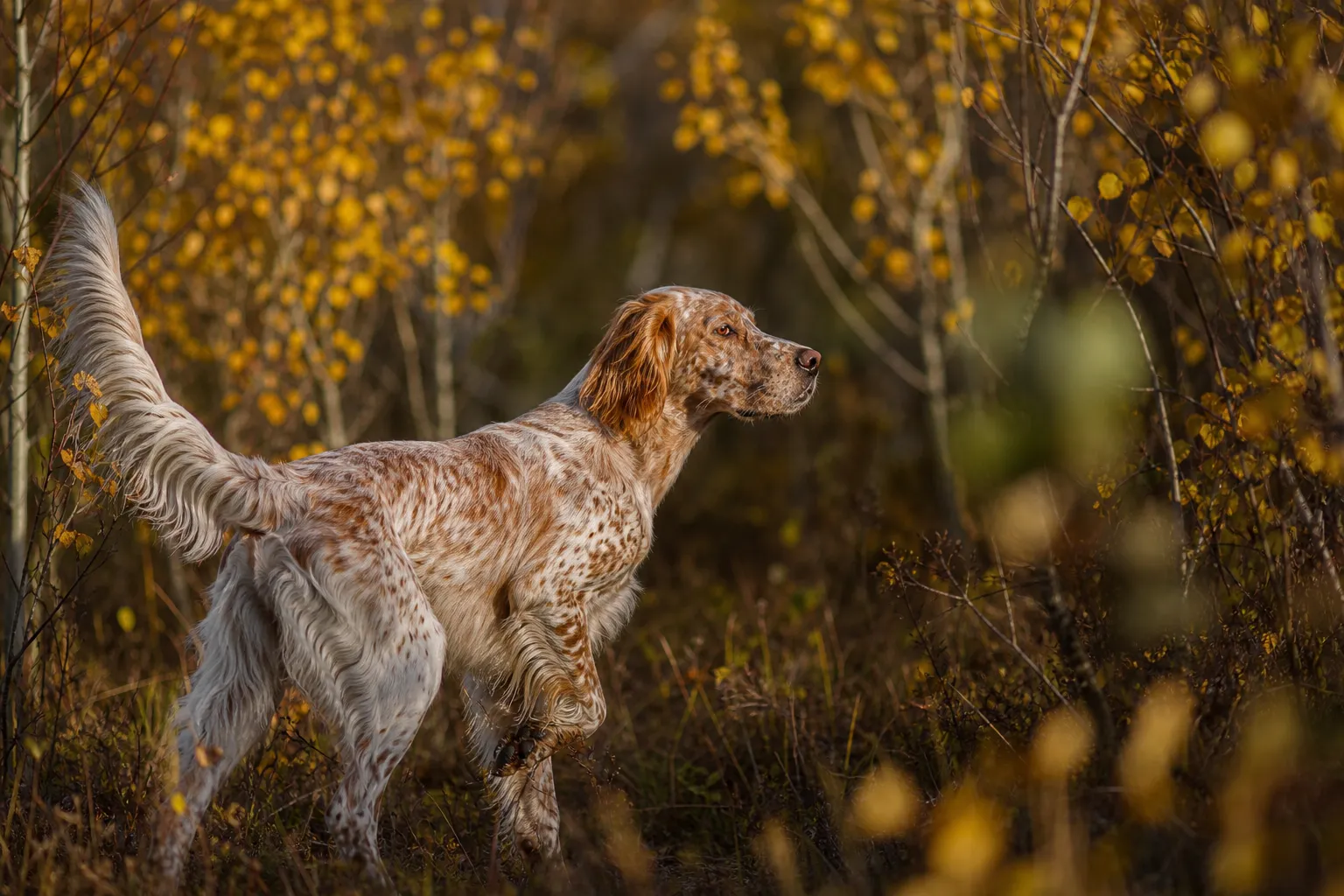

If one image defines grouse hunting, it is an English Setter stretched out on point in the aspens. The breed has been the grouse dog of record in North America for well over a century. Here is where that reputation came from, how the dog actually hunts, and whether one belongs in your truck.
Heritage
The English Setter came out of the bird-hunting estates of Britain and found its true calling in American grouse cover. Long before wing shooting, setting dogs crouched to mark birds for the net. When shotguns took over, the setter’s careful nose and staunch point made it the gun dog of the age.
Edward Laverack shaped the modern breed in England through the 1800s. Purcell Llewellin then built hard-hunting field lines from Laverack stock, and his dogs crossed the Atlantic to dominate early American field trials. That field strain still carries his name. If you want the full story, read the Llewellin Setter page, because for grouse hunters it is half of the setter story.
The other half is American. Setters filled the old grouse camps of New England and the Appalachians, from Maine woodlots to Pennsylvania mountain cover. George Ryman of Pennsylvania spent the early 1900s breeding setters for the foot hunter, dogs with looks, brains, and natural bird sense in one package. The Ryman type still names that style of grouse setter today. When a sporting artist paints a grouse hunt, the dog on the canvas is almost always a setter. That is not an accident. The setter on point is the iconic grouse image because for generations it was simply what a grouse dog looked like.
The Mystique
Ask a setter man why he hunts one and he will not lead with efficiency. He will talk about the way the dog moves. A good setter flows through cover, feathered tail going, then turns to stone when scent hits. Hunters have called the breed the poet of the grouse woods for good reason. The point is not just a stop. It is a picture.
Setter people also talk about heart. The breed matures slowly, and owners swear the wait is the point. A setter at two is a comedian. A setter at five is a partner who knows the cover as well as you do, and the years in between build something the fast-finishing breeds rarely give you. Old grouse hunters measure their lives in setters, and the good ones get talked about for decades after they are gone.
There is softness in the breed too, and setter owners count it as a feature. These are gentle, biddable dogs that want to be near you, in the woods and on the couch. The mystique is not manufactured. It was earned one October at a time, in cover most people never see.
In the Grouse Woods
A field-bred English Setter hunts grouse at medium range, adjusting to the cover in front of it. In thick young aspen the dog works close enough to hear. On logging roads and field edges it reaches out. The pace is smooth and steady, easy to walk behind all day.
Thick cover means you will lose sight of the dog, so setters and bells go together like October and woodsmoke. The old rule still holds. When the bell goes silent, go find your dog. Most hunters now pair a bell with a GPS collar, which takes the guesswork out of a long point in heavy cover.
On ruffed grouse (Bonasa umbellus), a seasoned setter learns to handle running birds by relocating carefully instead of crowding them. That patience takes a few seasons to develop, and it is worth every bumped bird along the way. Woodcock crossover is a bonus. The same covers hold both birds, woodcock sit tight for a pointing dog, and a young setter’s first solid points usually come over a woodcock.
The Other Ten Months
An English Setter between seasons is a house dog with a motor. The breed is affectionate, quiet indoors once exercised, and genuinely good with kids. But the energy is real, and a bored setter invents projects you will not approve of.
Plan on daily running, not just leash walks. Off-season roading, retrieving games, and summer training on pigeons keep a grouse dog fit and sharp. The feathered coat needs regular brushing, and after a day in the cover you will pull burrs. Setters do best living in the house with their people. This is not a breed to park in a kennel and visit in October.
Is This Your Dog?
Get an English Setter if you want the classic grouse dog and you are patient enough to let one develop. The breed rewards hunters who value style, temperament, and tradition alongside the game bag. It suits families, and a well-bred setter is forgiving enough for a committed first-time bird dog owner.
Skip the setter if you want a finished dog at eighteen months, a wash-and-wear coat, or a breed that thrives on two short walks a day. And buy carefully. Show lines and field lines have diverged, so find a breeder whose dogs actually hunt grouse. Ask what cover the parents run in. The right answer includes the word aspen.
If the setter’s grouse-bred field strain interests you, start with the Llewellin Setter, and if you like the setter idea with a heavier build and a more deliberate pace, look at the Gordon Setter. Learn the bird this breed was made for in our ruffed grouse field guide, then match the dog with the right gun in our 12 vs 20 vs 16 gauge grouse gun comparison. To weigh the setter against every pointing and flushing breed we cover, see the full grouse dog guide.
FAQ
English Setter questions, answered
Is the English Setter a good grouse dog?
Yes. The English Setter is the most storied grouse dog in North America, bred and proven for exactly this work over more than a century. Field-bred setters carry strong pointing instinct, a careful nose, and a pace that fits thick cover. Pick a pup from proven grouse or woodcock lines and you are starting with the deck stacked in your favor.
How far does an English Setter range?
Most field-bred English Setters work at medium range, roughly 50 to 150 yards depending on the line and the cover. Grouse-bred setters tighten up in thick woods and stretch out on field edges. Big-running trial lines exist and will hunt past 300 yards, so ask the breeder how the parents handle before you buy. A bell or GPS collar keeps you connected either way.
What is a Ryman setter?
A Ryman setter is an English Setter bred in the style developed by George Ryman of Pennsylvania in the early 1900s, built for foot hunters in grouse and woodcock cover. Ryman blended handsome, calm setters with proven field ability to make a close-working, natural gun dog. Today the name describes a type carried on by a small circle of dedicated breeders rather than a separate breed.
Are English Setters good family dogs?
Yes, English Setters are gentle, affectionate house dogs and among the softest-tempered of the pointing breeds. They live happily with kids and settle well indoors once their exercise needs are met. The trade is real energy and a feathered coat that collects burrs and sheds. A setter that hunts hard all fall and lives on the couch all winter is a happy setter.