



What is a sooty grouse?
The sooty grouse (Dendragapus fuliginosus) is the big, dark grouse of the Pacific coast, from northern California through Oregon and Washington into southeast Alaska. Like its interior twin, it carries an older name that refuses to die: hunters on the coast still call it blue grouse, and plenty just say hooter.
Until 2006, sooty and dusky grouse were one species, the blue grouse. Scientists split them by range, genetics, and voice. The sooty took the wet coastal forests and the west slope of the Cascades. The dusky took the interior mountains. In the field, range is your best clue to which bird you are looking at.
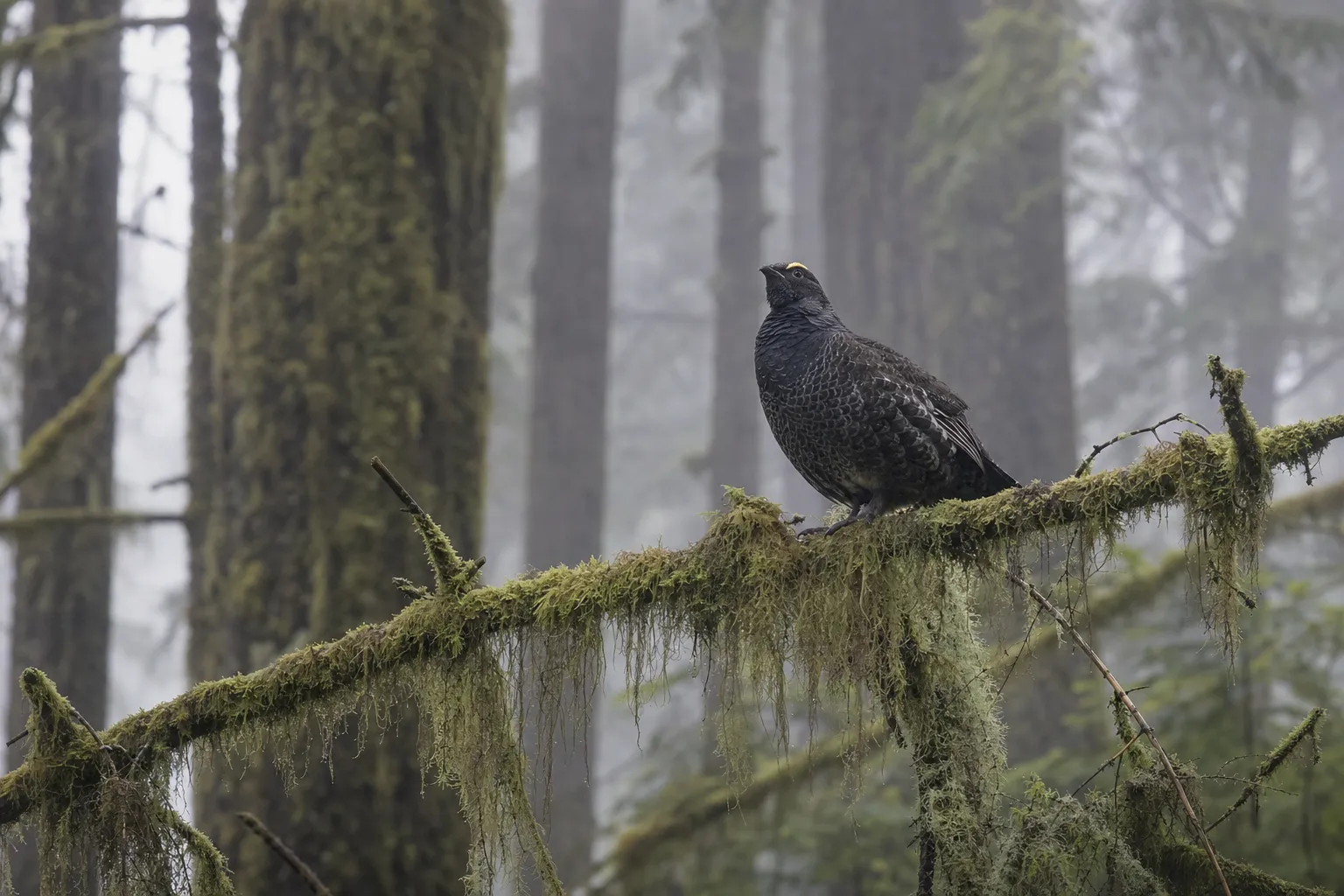
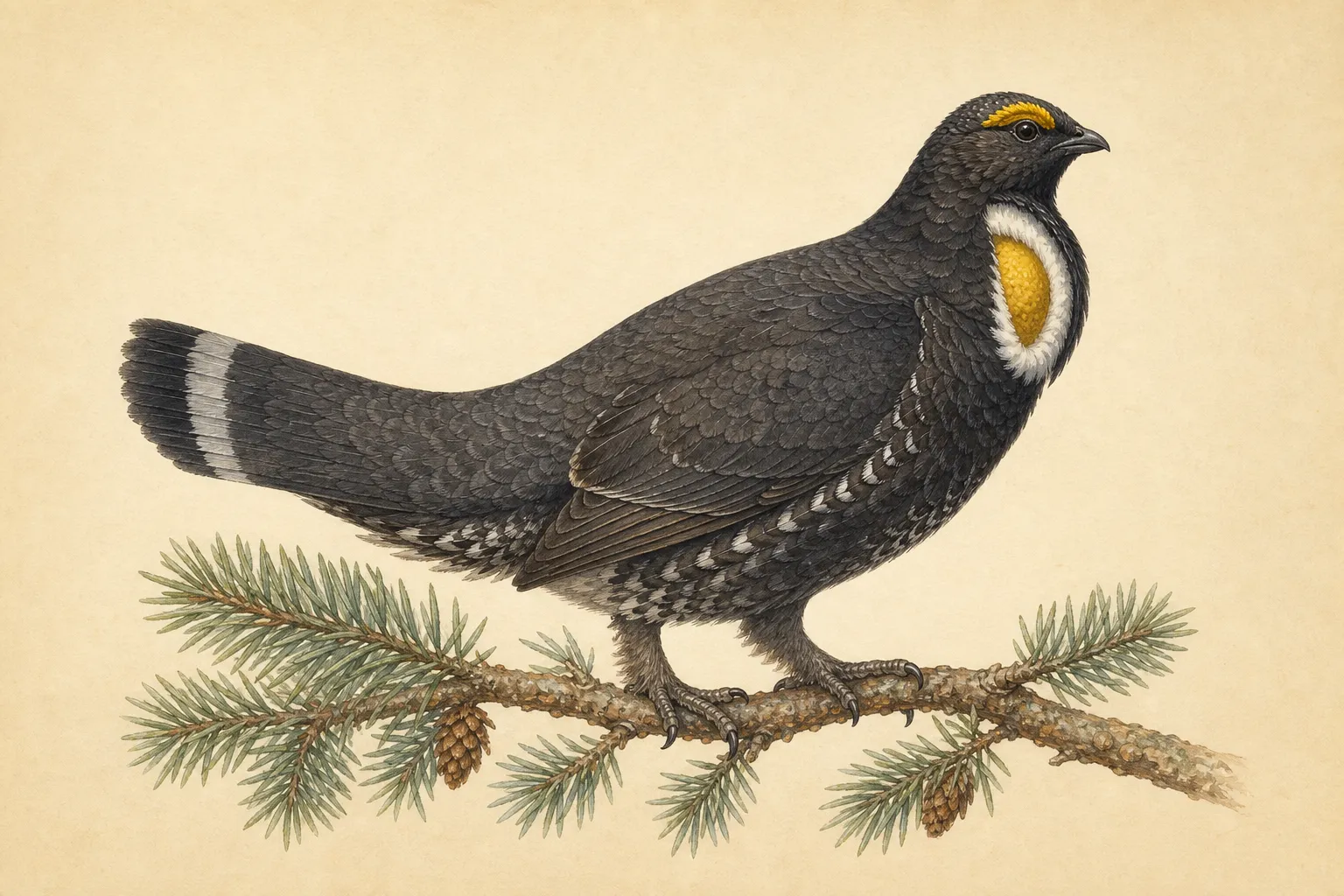
A sooty grouse weighs 2 to 3 pounds, twice a ruffed grouse. Males are dark sooty gray, with a yellow to orange eye comb and yellow air sacs on the neck that show in display. Hens are mottled brown. Compared to the dusky, the sooty is a shade darker overall and shows a clearer gray band on the tail tip.
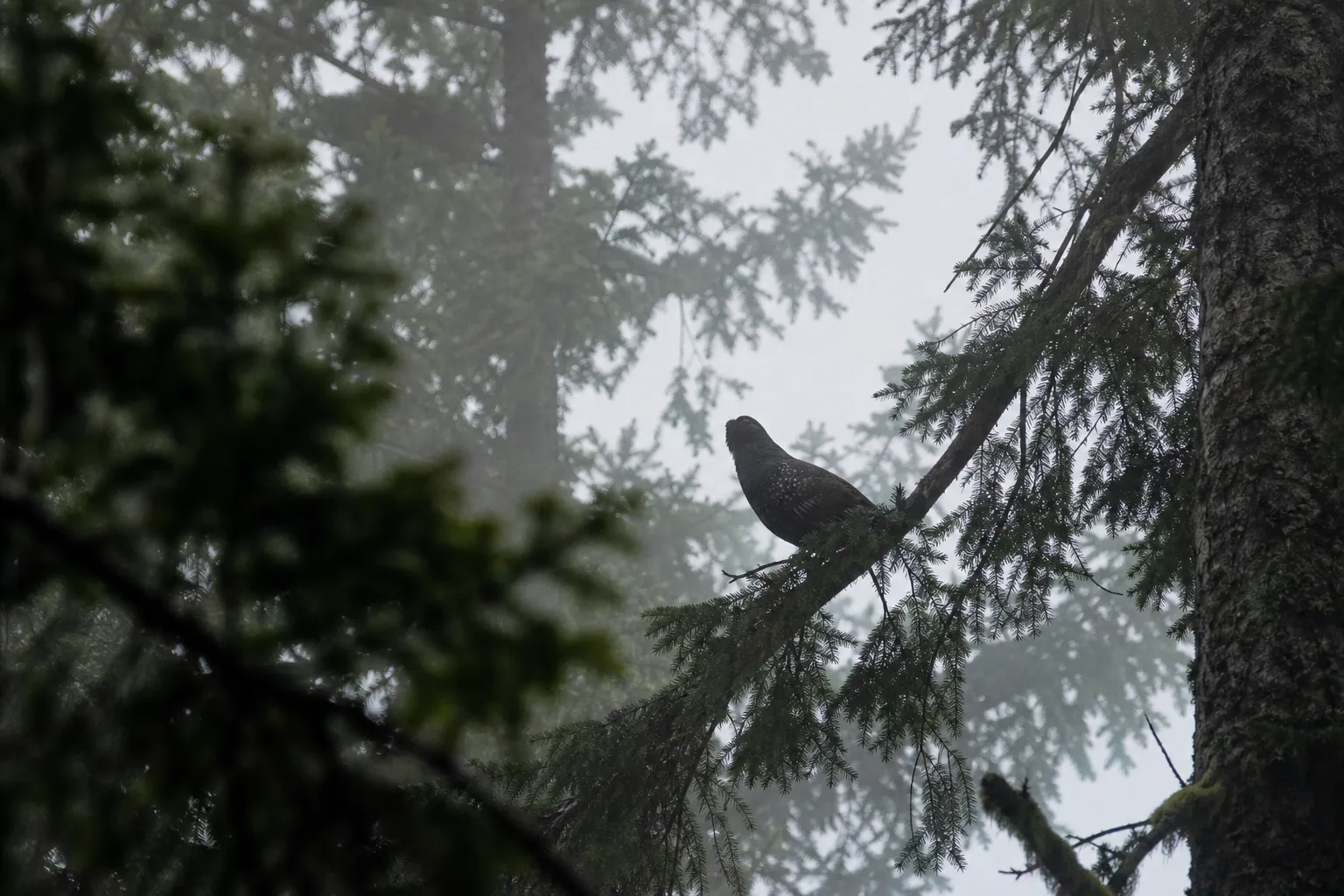
The voice is the legend. In spring, a male climbs high into a fir or hemlock and hoots, a deep, booming, five or six note series that rolls through the timber. The sound carries hundreds of yards and seems to come from every direction at once, which is why finding a hooting bird in a 200-foot tree humbles everyone who tries. By hunting season the woods are quieter, and flushes are heavy and fast.
What do sooty grouse eat?
Sooty grouse eat berries, greens, seeds, and insects through summer and early fall, then live on conifer needles through winter, mostly fir and hemlock. As with the dusky grouse, the diet is a moving target that climbs the mountain, and your hunting has to climb with it.
Early-season food is low and sweet. Salal berries, red huckleberry, elderberry, blackberries along road edges, clover and forbs in clearcuts and landings. Broods work these openings hard, and logging roads add the grit birds need. That is why a September sooty hunt so often looks like a long walk on a gated timber road with a dog making casts into the cuts.
When fall rains and frost knock the soft food down, birds shift to needles and start moving up. This is the same reverse altitudinal migration the dusky grouse makes: down the food ladder in spring, up the mountain in fall. By late season, sooty grouse sit in the crowns of mature conifers along high ridges, sometimes barely flying for days. The bird that was underfoot in a clearcut in September is a speck in a fir top by November.
Where do you find sooty grouse?
Sooty grouse are huntable in four states: Washington, Oregon, California, and Alaska. Washington and Oregon offer the easiest access, with birds through the coast ranges and the west side of the Cascades. Southeast Alaska’s island rainforests hold strong numbers, and northern California carries the southern end of the range.
Public land makes this hunt. National forests, state timberlands, and managed private timber with walk-in access cover most of the range, and the gated logging road network is the natural way to hunt it. Target younger cuts with berry ground early in the season, then follow ridges and upper road systems as birds climb toward wintering timber. Rain is part of the deal on the coast, and honestly it helps the dog work.
Seasons generally open around the start of September and vary by state and zone, and forest grouse rules on the coast sometimes lump sooty grouse with ruffed grouse under one limit. Check current regs before you plan a trip, especially on managed timberland where access rules change year to year. For a state-by-state starting point, see our guide to where to hunt grouse.
The sooty’s inland twin is the dusky grouse, the other half of the old blue grouse and the bird you will chase on Rocky Mountain ridges. If you cut your teeth on Northwoods partridge, our ruffed grouse guide shows how different this coastal hunt really is. And because a 3-pound grouse at the edge of a clearcut is a different shot than a partridge in the alders, our 12 vs 20 vs 16 gauge comparison will help you pick the gun for it.
Field Marks
How to know a sooty grouse
- Darker, sootier gray than the dusky grouse
- Yellow neck sac framed by white feathers in display
- Yellow-orange comb over the eye on males
- Long dark tail with a gray terminal band
- Heard more than seen: males hoot from high conifer canopies
The Season Arc
How the Sooty Grouse season unfolds
-
Early Season
Opener to leaf-drop
Early birds hold low in berry-rich clearcuts, logging road edges, and forest openings, with broods still grouped and holding for a dog.
- Walk gated logging roads through younger timber at first light.
- Hit salal, huckleberry, and elderberry patches while the fruit lasts.
- Broods flush in loose strings, so stay ready after the first bird.
- Early fog and drizzle keep birds feeding longer into the morning.
-
Mid Season
Leaf-off
Birds start the climb toward wintering timber, staging along ridges and upper clearcut edges as the low food plays out.
- Move upslope week by week and hunt the freshest sign you cut.
- Ridge saddles and upper road systems concentrate traveling birds.
- Flushes go long and downhill, so pick lanes before the dog gets birdy.
- Rain-soaked ground holds scent well, a real edge for dog work.
-
Late Season
Cold and snow
Late-season birds live high in mature conifer canopy eating needles, and most are taken by hunters who spot them in the trees.
- Glass the crowns of firs and hemlocks along high ridges.
- Birds may barely fly for days, so look more than you walk.
- Snow line is a guide, since sooties winter above it, not below.
- Where seasons run late, this is a spot-and-stalk hunt with a shotgun.
Times of Day
When to be in the cover
Morning
Birds feed along road edges, clearcut fringes, and berry ground early. Cover ground on foot while the birds are down and moving.
Midday
Grouse loaf in timber shade and low branches through midday. Slow down and still-hunt the edge between openings and big trees.
Evening
The evening feed pulls birds back to openings and gravel. The last hour on a quiet logging road is the classic sooty setup.
Tactics Box
Sooty Grouse tactics that hold up
- Hunt logging road systems on foot, because roads are food edge, grit, and travel lane in one.
- Look up constantly. A sooty grouse in a fir crown vanishes the moment it stops moving.
- Keep the dog close in big timber, since flushed birds tower into the canopy rather than run out ahead.
- Mark treed birds and circle for an angle, they often sit tight and offer a second chance.
- Bring rain gear that is quiet. Coastal grouse hunting is wet hunting.
- Carry 6s or 7.5s and a choke tube for longer edges, this is a bigger bird than a partridge.
FAQ
Sooty Grouse questions, answered
What is the difference between sooty and dusky grouse?
Sooty grouse live in the Pacific coastal forests while dusky grouse live in the interior mountains, and both were called blue grouse until scientists split them in 2006. Male sooties are darker, show yellow neck air sacs, and hoot loudly from high in conifers. Male duskies show reddish-purple neck sacs and hoot quietly near the ground.
What do sooty grouse eat in the fall?
In early fall sooty grouse eat berries like salal and huckleberry, green plants, seeds, and insects in clearcuts and forest openings. As that food fades they shift to conifer needles, mainly fir and hemlock, and move upslope to winter in mature timber. Early season, hunt the berries. Late season, hunt the trees.
Where is the best sooty grouse hunting in the US?
Washington and Oregon offer the most accessible sooty grouse hunting, across the coast ranges and the west slope of the Cascades. Southeast Alaska holds excellent numbers in its island rainforests, and northern California rounds out the range. Huge tracts of national forest and state timberland keep access simple.
Why do sooty grouse hoot?
Male sooty grouse hoot in spring to claim territory and attract hens, giving a deep, six-note series from high in a conifer that can carry a quarter mile or more. The sound is famously hard to pinpoint, seeming to come from everywhere at once. Hunters and biologists both know the bird simply as the hooter.
What is the best time of day to hunt sooty grouse?
Early morning and the last hour of daylight are the best times to hunt sooty grouse, when birds feed along road edges, clearcut fringes, and berry patches. Midday birds sit in timber and are hard to find without a dog or a lot of glassing. Overcast coastal weather can stretch the morning feed longer.