


What is a dusky grouse?
The dusky grouse (Dendragapus obscurus) is the big gray grouse of the Rocky Mountains, and hunters still call them blue grouse. Ask around any trailhead in Colorado or Montana and you will hear blue grouse far more often than dusky. Same bird, older name, and this guide uses both.
The name changed in 2006, when scientists split the old blue grouse into two species: the dusky grouse of the interior mountains and the sooty grouse of the Pacific coast. The field guides updated. Most hunting camps did not.
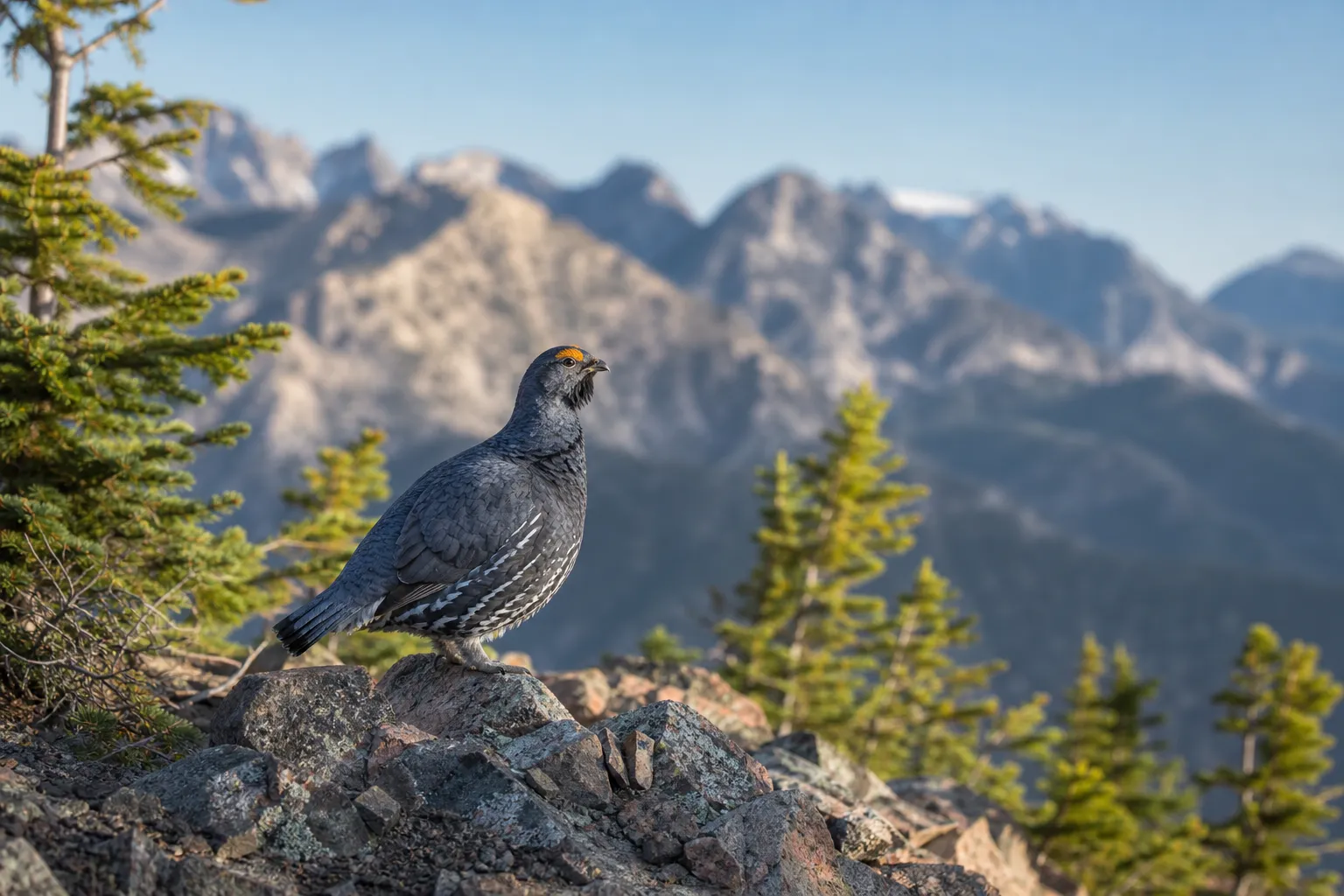
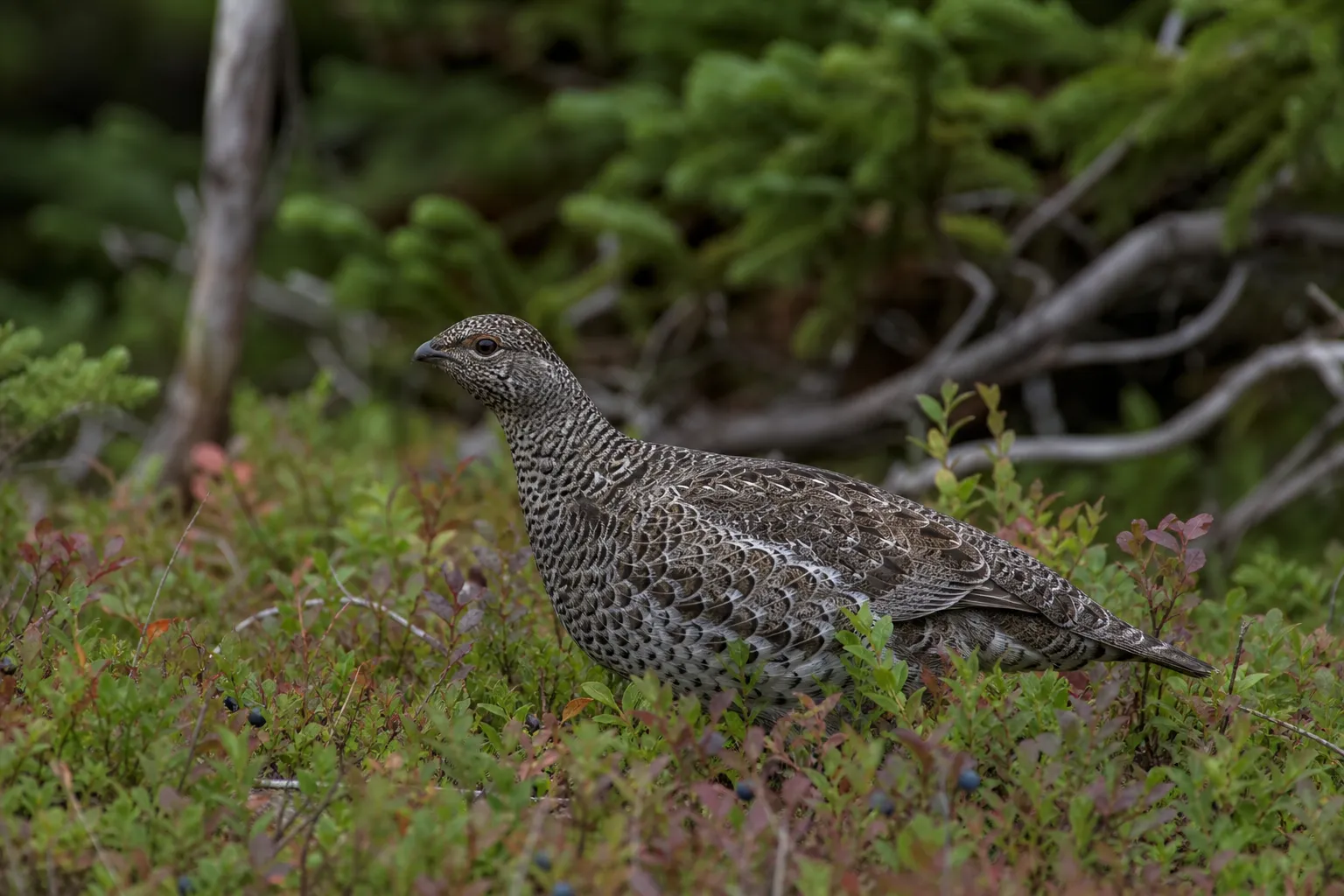
This is a big bird. At 2 to 3 pounds, a dusky grouse is roughly twice the weight of a ruffed grouse, and a mature male flushing off a ridge feels closer to a small sage grouse than to a Northwoods partridge. Males are slate gray with a yellow to orange comb over the eye, and in display they expose reddish-purple air sacs on the neck. Hens are mottled brown and noticeably smaller.
The sound of the species is hooting. In spring, males give a series of low, muffled hoots, usually from the ground or a low perch, so quiet you often cannot tell how close the bird is. In fall the mountains are mostly silent, and you will find birds by sign and dog work. Flushes are loud and downhill, a heavy bird trading altitude for speed.
What do dusky grouse eat?
Dusky grouse eat berries, green plants, seeds, and grasshoppers through summer and early fall, then switch almost entirely to conifer needles for winter, with Douglas-fir the staple. Read that diet as elevation. Soft food grows low on the mountain, winter food grows high, and the birds follow it upward.
Early in the season the menu keeps birds in mid-elevation meadows, chokecherry and serviceberry draws, aspen pockets, and grassy openings. Broods work these food-rich edges the way ruffed grouse broods work logging trails, and grasshoppers are a bigger part of the diet than most hunters expect.
Hard frosts flip the switch. As forbs and berries die out, birds begin the climb toward the ridgetop conifer stands where they will winter on needles. By late season a dusky grouse can spend nearly the whole day in a fir tree, eating and roosting in the same canopy. Hunters who keep working September elevations in late October are hunting empty country. The food moved up, and so did the birds.
Where do you find dusky grouse?
Dusky grouse live across the interior mountain West, and the strongest hunting is in Colorado, Idaho, and Montana, with good populations in Wyoming, Utah, Nevada, New Mexico, Arizona, and east of the Cascade crest in Oregon and Washington. Almost all of it is public land, mostly national forest.
Because of the reverse altitudinal migration, where to find them depends on the calendar. September birds sit at mid elevations near meadows, berries, and water. October birds are climbing. Late-season birds are on high conifer ridges, often above the snow that pushed the deer hunters down. Hunt the elevation band with fresh sign, and be willing to move a thousand vertical feet to find it.
Look for the edge where open feeding cover meets timber: meadow rims, aspen and fir transitions, ridgeline saddles, and old burns growing back into food. Many hunters find their first blue grouse by accident while scouting elk, then come back with a shotgun and a dog. That is a legitimate strategy. Archery elk hunters cover exactly the country these birds live in, so log every grouse you bump in September.
Seasons generally open around the start of September and run into fall, but dates and limits vary by state, so check current regs before you build a trip around them. Our state-by-state guide to where to hunt grouse breaks down the best mountain ranges and national forests to start with.
The dusky grouse’s coastal twin is the sooty grouse, the other half of the old blue grouse and a hooting legend of the Pacific rainforest. If your grouse roots are back East, see how this bird compares to the ruffed grouse of the Northwoods. And since a blue grouse asks a little more of your shotgun than a partridge does, our 12 vs 20 vs 16 gauge comparison will help you choose the right mountain gun.
Field Marks
How to know a dusky grouse
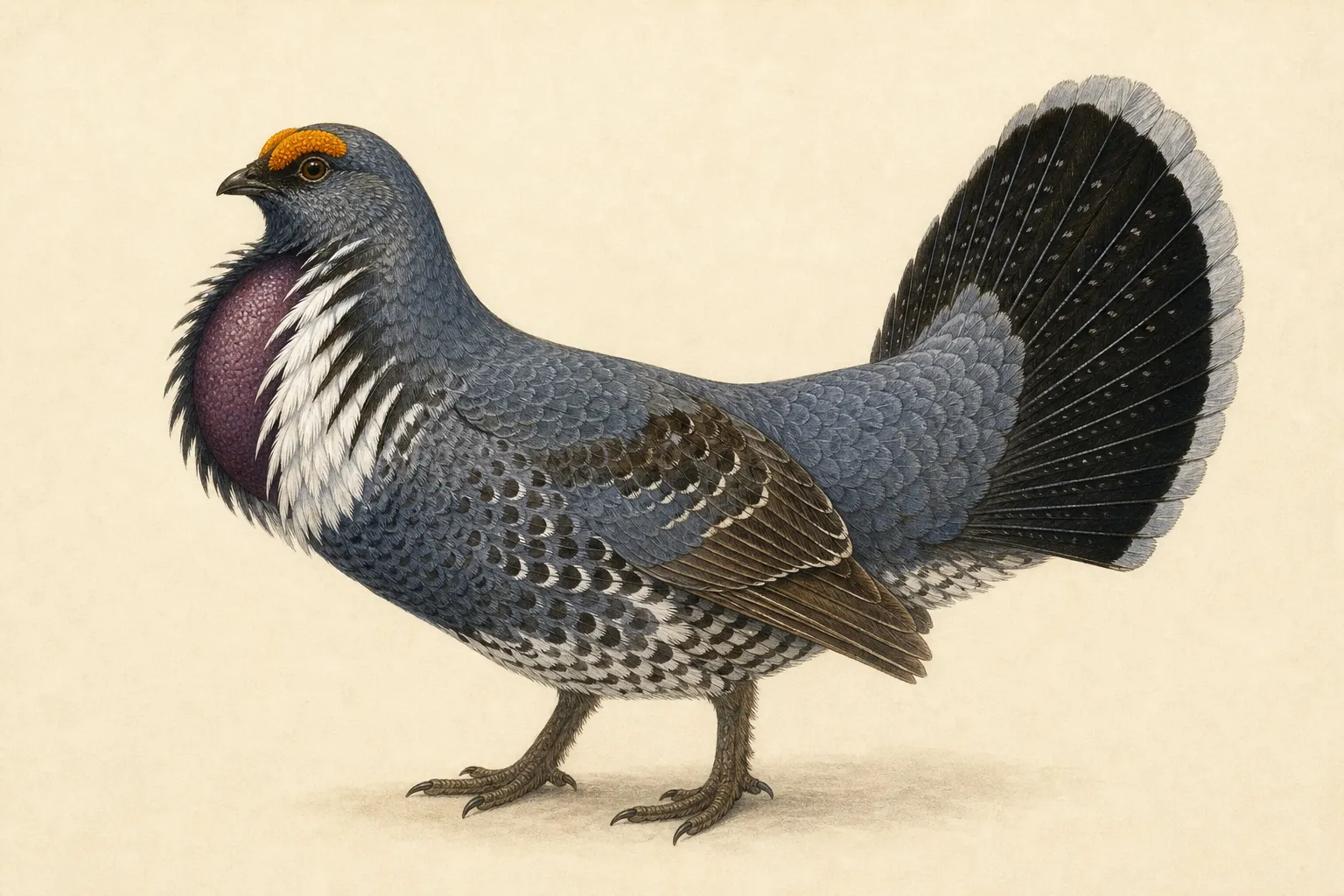
- Big blue-gray body, noticeably larger than a ruffed grouse
- Orange-yellow comb over the eye on males
- Reddish-purple neck sac framed by white feathers in display
- Long blackish tail with a pale gray band at the tip
- Hens are mottled gray-brown
The Season Arc
How the Dusky Grouse season unfolds
-
Early Season
Opener to leaf-drop
Early-season birds sit low on the mountain, holding broods in berry patches, aspen pockets, and grassy openings near water.
- Hunt mid-elevation meadows, chokecherry draws, and aspen edges in September.
- Broods hold well for a dog while the food is still down low.
- Water sources concentrate birds in dry early-fall years.
- Grasshopper-rich openings are worth a slow loop every time.
-
Mid Season
Leaf-off
Birds start their reverse migration, drifting upslope as frost kills the forbs, so you climb higher week by week to stay on them.
- Follow the food line uphill as berries and greens freeze out below.
- Check ridgelines and saddles between feeding pockets and timber.
- Flushes get longer as broods break up, so keep the dog close.
- Fresh droppings and dusting bowls tell you what elevation holds birds.
-
Late Season
Cold and snow
Late birds finish the climb and winter high in conifer stands, eating needles near the ridgetops while the snow piles up below them.
- Hunt high ridges with Douglas-fir and open south-facing timber.
- Birds spend most of the day in trees, so scan branches as you climb.
- Snow lines push other game down but push these grouse up.
- Late hunts are as much mountaineering as bird hunting, so plan accordingly.
Times of Day
When to be in the cover
Morning
Birds feed in openings, meadow edges, and berry pockets early. Start your climb through feeding cover at first light.
Midday
Grouse loaf in shade and timber edges through midday. Work the transition line between open feed and dark timber.
Evening
An evening feed pulls birds back into the open. Ridge edges and grassy pockets in the last hour of light are prime.
Tactics Box
Dusky Grouse tactics that hold up
- Climb early and hunt the elevation where you find the freshest sign, not where you found birds last month.
- Keep a dog under control in open country, because these birds will run ahead on the ground before flushing.
- Mark flushed birds carefully. They often fly downhill and land in trees you can hunt again.
- Carry more gun than a Northwoods setup, since a dusky grouse is twice the bird a ruffed grouse is.
- Hunt edges where meadow meets timber, the classic blue grouse line.
- Bring water and real boots. Blue grouse hunting is a mountain hunt.
FAQ
Dusky Grouse questions, answered
What is the difference between dusky and sooty grouse?
Dusky grouse live in the interior mountains of the West while sooty grouse live along the Pacific coast, and the two were considered one species, the blue grouse, until 2006. Male duskies show reddish-purple neck air sacs and hoot softly from the ground. Male sooties show yellow neck sacs and hoot loudly from high in conifers.
What do dusky grouse eat in the fall?
In early fall dusky grouse eat berries, green leaves, seeds, and grasshoppers in mountain meadows and draws. As frost kills that food they shift to conifer needles, especially Douglas-fir, which carries them through winter. That food shift is what drives the birds up the mountain as the season runs.
Where is the best dusky grouse hunting in the US?
Colorado, Idaho, and Montana offer the best dusky grouse hunting, with big public mountain ranges and healthy bird numbers. Wyoming, Utah, Nevada, New Mexico, Arizona, and the east slopes of Oregon and Washington all hold huntable populations too. Nearly all of it happens on national forest land.
What choke and shot size for dusky grouse?
Improved cylinder or modified choke with No. 6 or 7.5 shot is the standard dusky grouse setup. These are big grouse and mountain flushes run longer than Northwoods shots, so many hunters lean toward 6s as the season goes on. An open-and-tight double covers both ends well.
Why do dusky grouse move up the mountain in fall?
Dusky grouse move upslope in fall because their winter food, conifer needles, grows on the high ridges, so they migrate toward it as low-elevation forbs and berries die off. This reverse altitudinal migration is backwards from elk and deer, which drift downhill ahead of snow. By winter the birds live high in the timber.