


What is a greater sage-grouse?
A greater sage-grouse (Centrocercus urophasianus) is the largest grouse in North America, a bird of the wide sagebrush basins of the West that can weigh as much as seven pounds. It is a sagebrush obligate, meaning it cannot live without sage, and it is one of the most tightly regulated gamebirds on the continent. Old-timers across the West still call them sage hens.
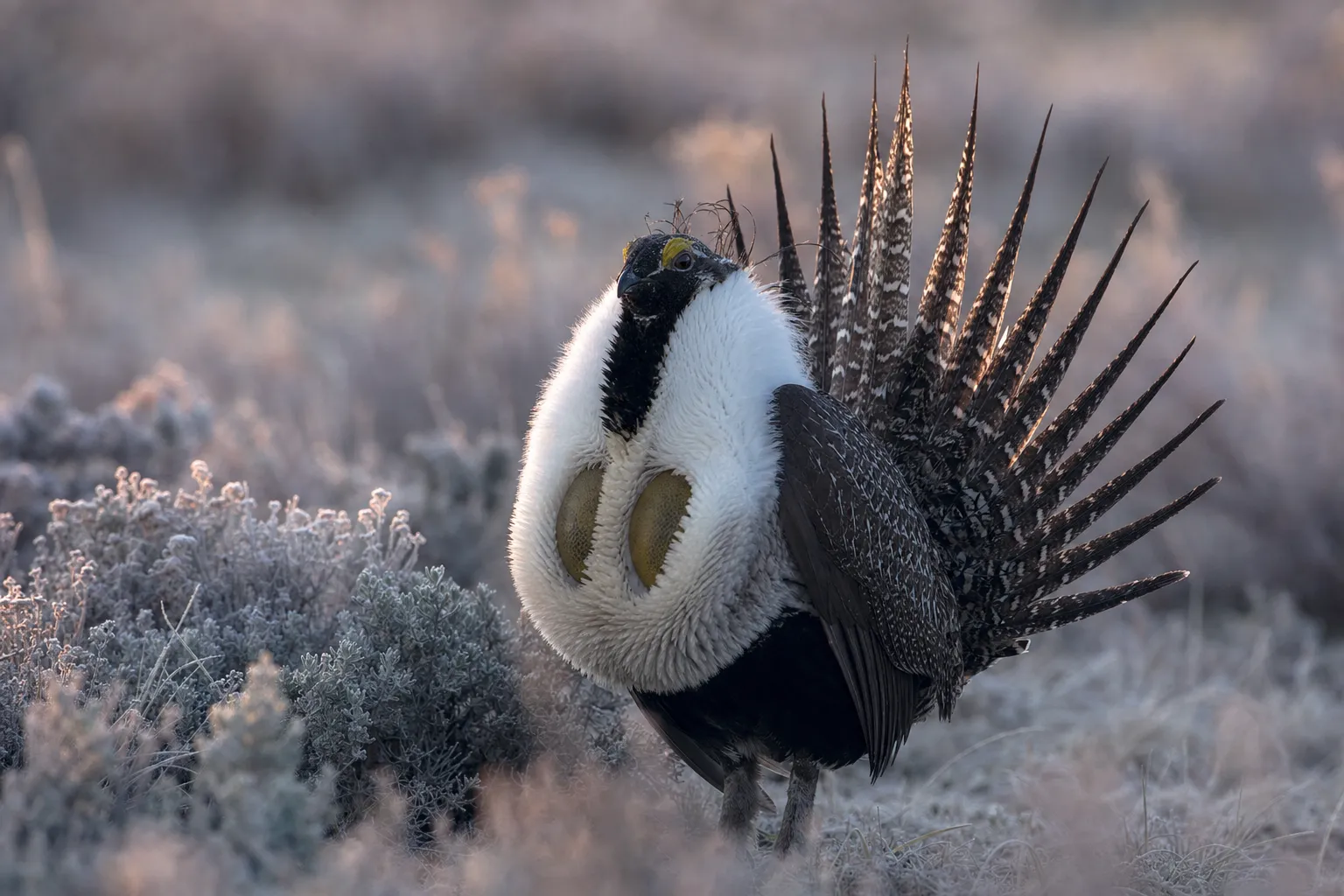
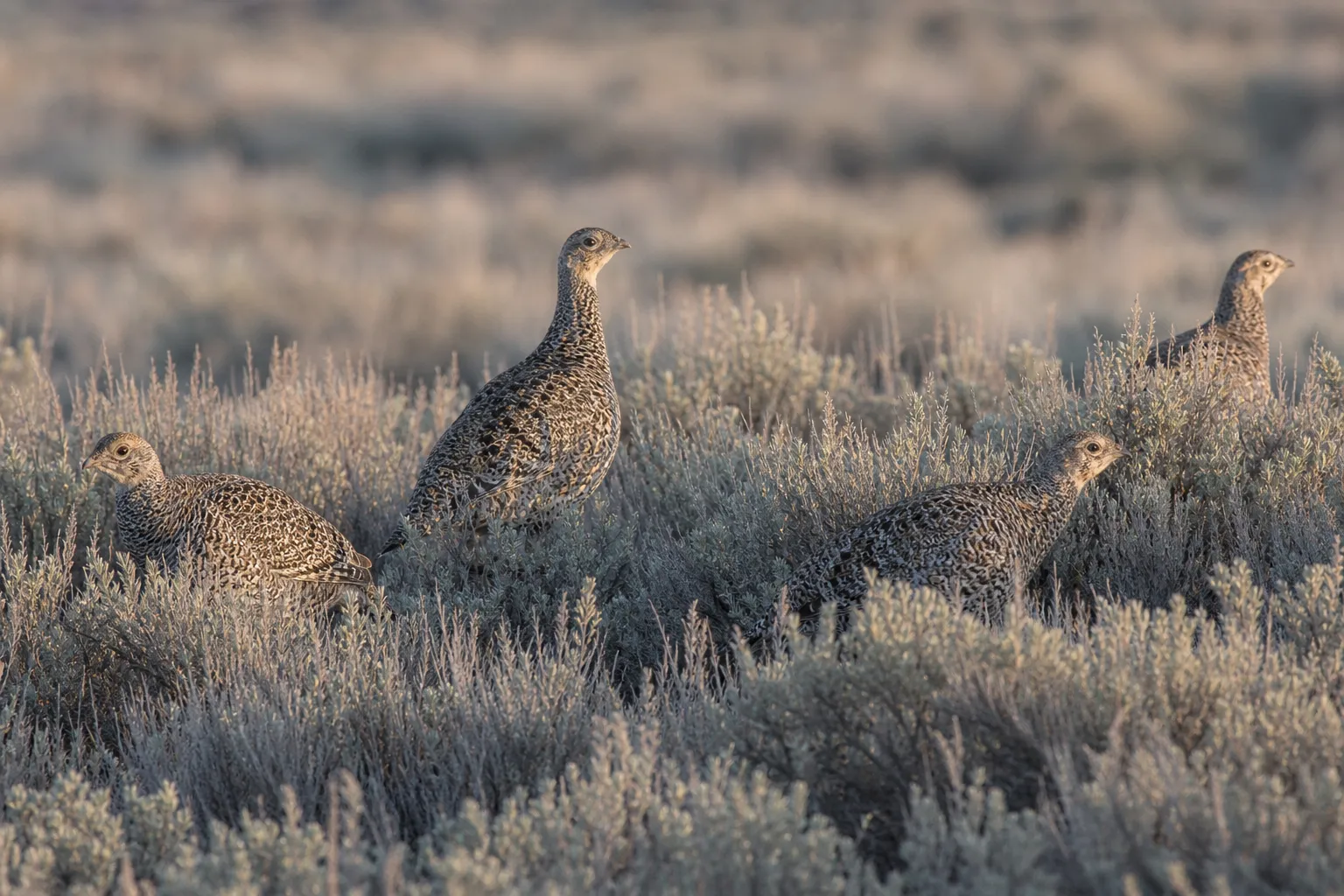
Size is the first field mark. A mature male dwarfs every other grouse, running four to seven pounds with a wingspan pushing three feet, while hens run two to four pounds. Both sexes wear mottled gray-brown above a solid black belly, with long, spiky tail feathers. Males add a white chest, a black throat, and yellow eye combs. In spring, those males gather on open leks at dawn, fan their tails, and inflate paired yellow air sacs to throw a swishing, popping display that sounds like nothing else in nature. The sage grouse dance draws photographers and biologists from around the world every March and April.
In the fall you will mostly hear wings. A flock of sage-grouse lifting out of the sage is a heavy, thundering rise, often with low clucks, and the birds fly faster and farther than their size suggests.
Two things surprise first-time sage-grouse hunters. The first is how far a full-grown bird carries once it clears the sage, covering hundreds of yards on set wings before dropping back in. The second is how a bird that size can vanish. A flock feeding in waist-high sage is invisible until it flushes, which is why glassing beats walking in this country. Learn the difference between a young bird of the year and a heavy old male, because the young birds are both easier to approach and far better on the plate.
What do greater sage-grouse eat?
Greater sage-grouse eat sagebrush, and in winter they eat almost nothing else. Their soft gizzards cannot grind hard seeds, so unlike prairie chickens they never trade into grain fields. Summer and early fall bring the exception, when forbs like dandelion and clover plus insects pull birds toward moisture.
That exception is the whole hunting strategy, because most open seasons fall in September while birds are still on green feed. Wet meadows, springs, creek bottoms, and the edges of alfalfa fields inside big sage country concentrate birds that would otherwise be scattered across an ocean of shrubs. Once hard frosts kill the forbs, the birds dissolve back into pure sagebrush and their diet goes back to leaves.
At the table, sage-grouse is deep red meat with an honest hint of its diet. Cool the bird fast, sear the breast rare like a duck, and braise the legs, and it eats far better than its reputation.
Where do you find greater sage-grouse?
Wyoming is the center of the sage-grouse world, holding the largest population of the species, with Montana and Nevada the other two states where a traveling hunter can most realistically plan a hunt. Idaho, Oregon, Utah, Colorado, and California offer limited or draw-based seasons, and several range states are closed outright.
The habitat question has a one-word answer, sagebrush, but the useful version is more specific. In September, hunt the green seams inside the sage. Wet meadows, springs, irrigated hay edges, and creek bottoms hold the food and moisture that concentrate birds. Fresh droppings and dusting bowls tell you a flat is being used. Most sage country is public, with vast BLM acreage open to walking, which makes access the easy part and finding birds in all that room the hard part.
The regulations are the other half of the story. Seasons are short, often a week or two, bag limits run one or two birds, and quotas, permits, and open units change year to year as agencies track this bird’s long decline. Treat every sage-grouse hunt as a check-the-regs-first hunt, and use our western states grouse hunting guide to see how sage country fits into a bigger trip.
Many hunters pair a sage-grouse morning with other birds nearby. The sharp-tailed grouse overlaps sage country in Montana and Wyoming, and the dusky grouse waits in the timbered mountains above the basins. For a bird this size, gun choice matters more than usual, and our 12 vs 20 vs 16 gauge grouse gun comparison makes the case for carrying a little more payload out here.
Field Marks
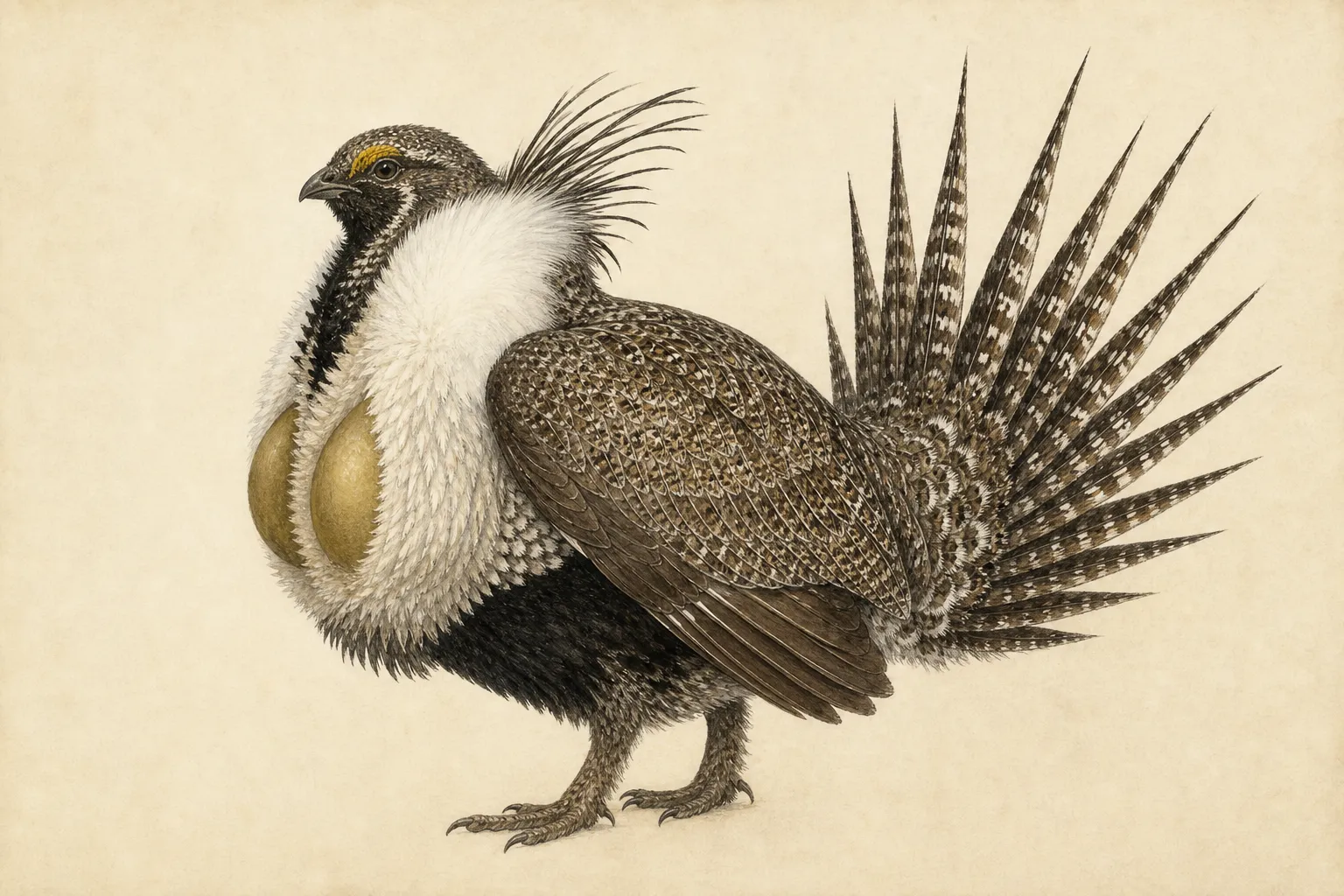
How to know a greater sage-grouse
- Largest grouse in North America, males up to 7 pounds
- Long, spiky tail feathers fanned in display
- Black belly patch and throat on males
- White chest ruff with two olive-yellow air sacs in display
- Yellow comb over the eye on males
The Season Arc
How the Greater Sage-Grouse season unfolds
-
Early Season
Opener to leaf-drop
Most open seasons run in September, when family groups sit near wet meadows, creek bottoms, and alfalfa edges close to sage.
- Hunt the green, birds key on forbs and moisture before frost
- Work meadow edges and springs at first light
- September birds hold reasonably well for a steady dog
- Big country means glassing first and walking second
-
Mid Season
Leaf-off
Where any season stretches past September, birds drift from green feed back into pure sagebrush and group up.
- Follow the shift from meadow edges to sage flats with taller shrubs
- Flocks flush farther, mark birds down and relocate carefully
- Droppings and tracks in dusty flats tell you a flat is live
- Most states are already closed by now, check current regs
-
Late Season
Cold and snow
Late fall and winter sage-grouse live entirely in sagebrush, but hunting is closed almost everywhere by then.
- Winter flocks concentrate where sage stays above the snow
- This is the season for scouting and lek homework, not hunting
- Note wintering areas, spring leks sit nearby
- Respect closures, this bird's margins are thin
Times of Day
When to be in the cover
Morning
Sage-grouse feed at first light near wet meadows, springs, and green edges in early fall. Morning is the most productive window of a short season.
Midday
Birds loaf in taller sagebrush shade through midday. Slow work through loafing sage can still produce, but flushes come at range.
Evening
A second feeding run toward green feed and water builds in the last two hours of light.
Tactics Box
Greater Sage-Grouse tactics that hold up
- Glass meadows, springs, and alfalfa edges before you burn boot leather, sage country punishes blind walking
- Keep the dog close and watered, September sage flats run hot and dry
- Take the first bird of a flock rise, giant birds fly faster than they look
- Carry modified choke and lead 5s or 6s, these are duck-sized targets and beyond
- Confirm your permit, unit, and one-or-two-bird limit before the trip, rules change yearly
- Field dress birds fast and get them cool, sage-grouse spoil quickly in warm weather
FAQ
Greater Sage-Grouse questions, answered
Do you need a special permit to hunt sage-grouse?
In several states, yes. Oregon, Utah, Colorado, and California issue sage-grouse permits through limited draws or registration, while Wyoming, Montana, and Nevada have generally run short seasons on a standard upland license. Rules, quotas, and open units change almost every year as populations shift. Never plan a sage-grouse hunt on last season's information, check current regs first.
Why do sage grouse dance?
Male sage grouse dance on spring leks to win mating rights, fanning spiked tails and inflating two yellow air sacs on a white chest to produce a strange swishing and popping display. Dozens of males may gather on a single lek at dawn, and hens choose among them, with a few dominant males doing most of the breeding. The sage grouse dance is one of North America's great wildlife spectacles and draws watchers to lek viewing sites every March and April.
Where is the best sage grouse hunting in the US?
Wyoming offers the best sage grouse hunting in the country, holding the largest population, with Montana and Nevada next in line. All three run short early-fall seasons with small bag limits. Idaho, Oregon, Utah, Colorado, and California offer limited or draw-based opportunities, and several other range states are closed entirely. Check current regs before planning any trip.
What do sage grouse eat?
Sage grouse eat sagebrush leaves for most of the year, and in winter sagebrush is essentially their entire diet. In summer and early fall they add forbs like dandelion and clover plus insects, which is why September birds sit near wet meadows and green edges. Unlike other grouse, they cannot digest hard seeds or grain, so they never leave the sage for cropland.
What is the best time of day to hunt sage grouse?
Early morning is the best time to hunt sage grouse, when birds feed near wet meadows, springs, and green edges and sit tighter for dogs. The last two hours of light offer a second chance as birds feed again. Midday birds loaf in taller sage and flush at longer range.
Are sage grouse good to eat?
Sage grouse are good to eat if you treat them like the dark-meated, sage-fed bird they are, which means cooling them fast, cooking the breast hot and rare like a duck, and slow-cooking the legs. The sage flavor is real but far milder in young birds handled well. Overcooked sage grouse earned the bad reputation, not the bird itself.