


What is a ptarmigan?
A ptarmigan is a small arctic and alpine grouse that turns pure white in winter and wears feathered feet that act like snowshoes. The p is silent, TAR-mi-gan. North America holds three species, the willow, rock, and white-tailed ptarmigan, and this page covers all three, because a hunter in the right country can meet more than one in a day.
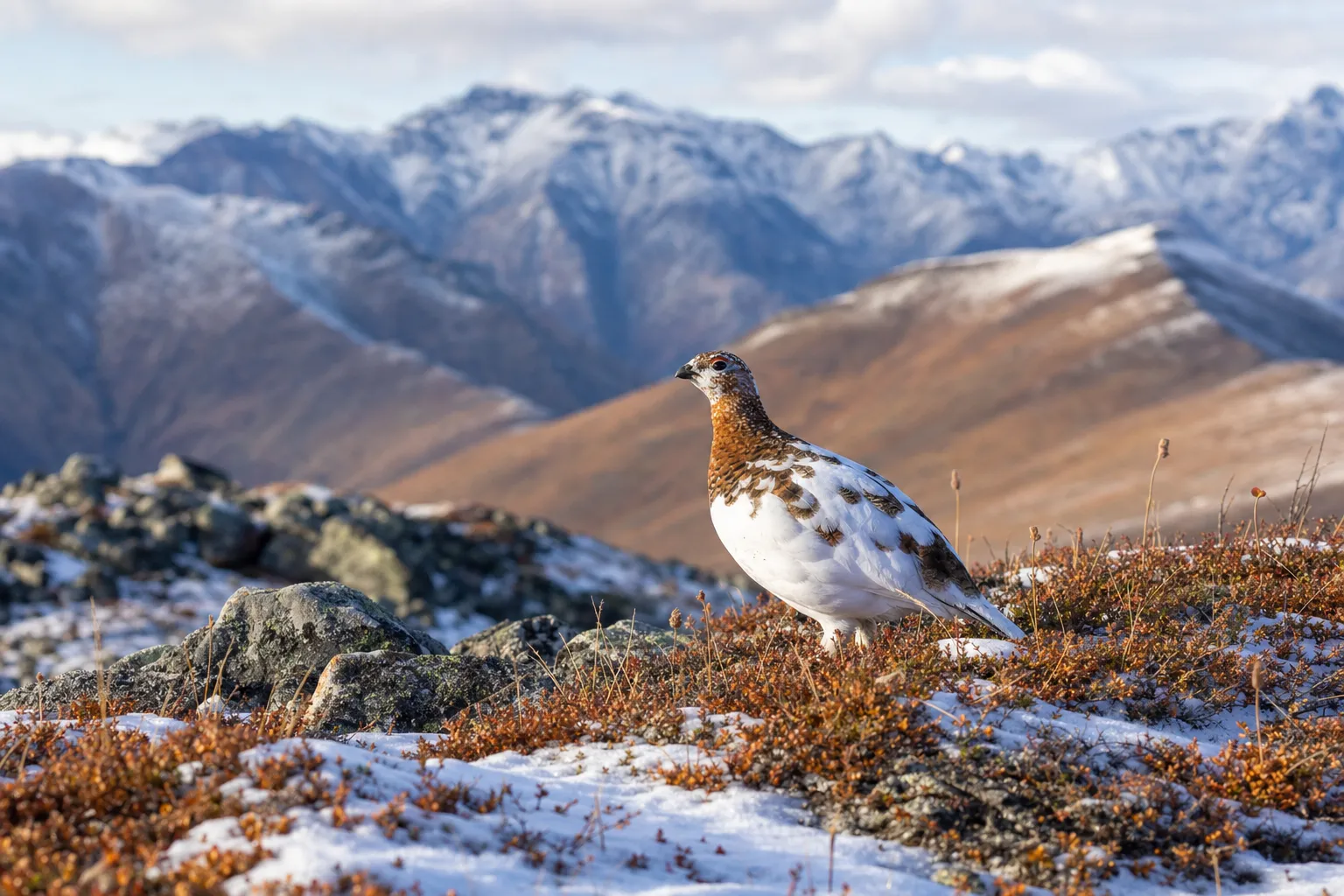
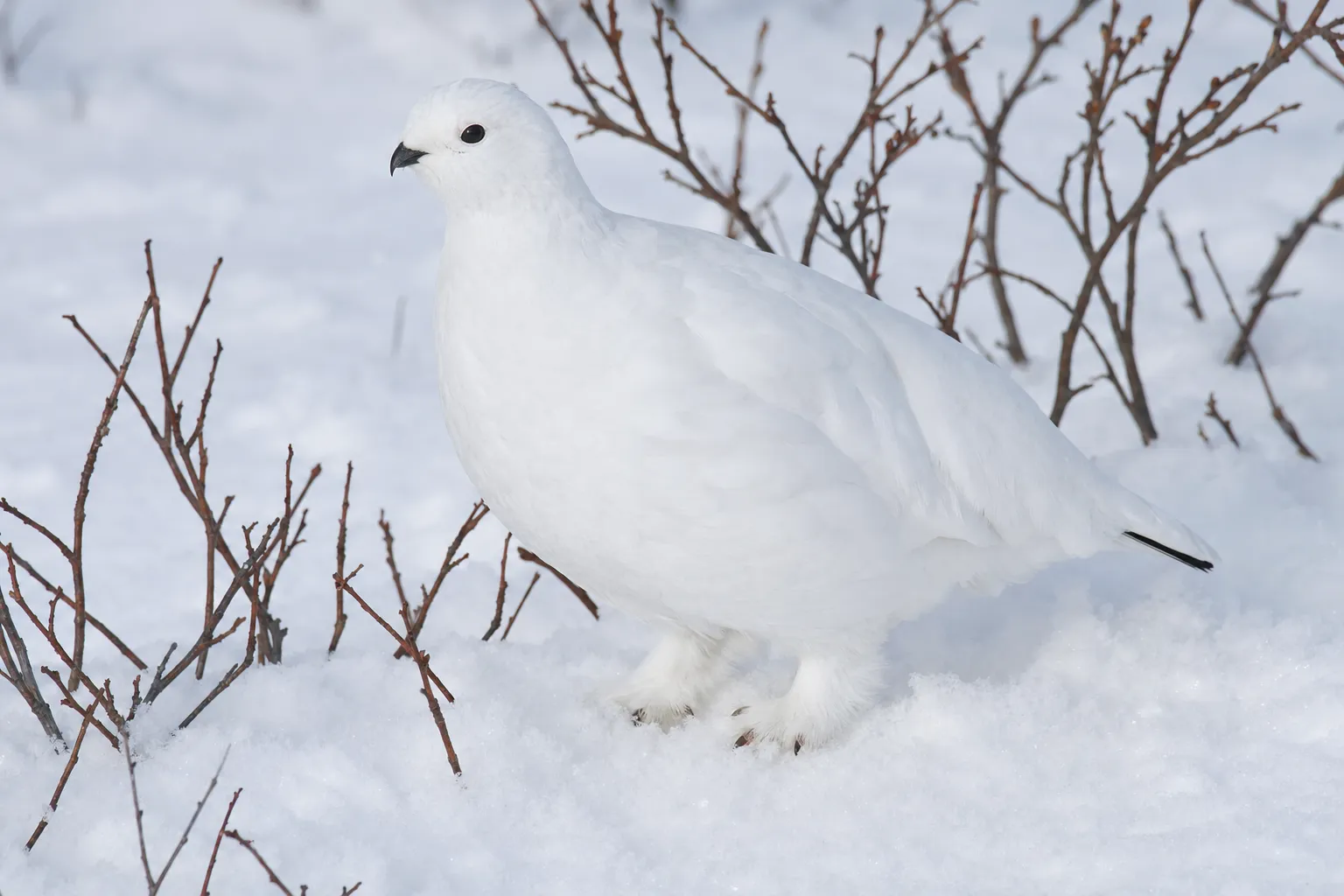
All ptarmigan share the same basic design. They are compact birds, three-quarters of a pound to a pound and a half, mottled brown or gray in summer and white in winter, with white wings showing in flight through much of the year. They live where trees give up, on tundra, willow flats, and alpine ridges. They hold tighter than almost any other gamebird, often walking ahead of a hunter or flushing at boot-tip range, and they are famously vocal. The willow ptarmigan (Lagopus lagopus), Alaska’s state bird, gives a low comic croak that hunters render as “go-back, go-back.”
Willow vs rock vs white-tailed ptarmigan: what is the difference?
Size, tail color, and elevation separate the three. The willow ptarmigan is the largest and reddest, living in brushy tundra and willow flats. The rock ptarmigan is grayer and smaller, living on higher, stonier ground. The white-tailed ptarmigan is the smallest and the only one with a white tail year-round.
Willow and rock ptarmigan both carry black tail feathers in every season, which is the fastest way to rule out a white-tailed bird. Splitting willow from rock takes a second look. Willows are bigger, show rich chestnut in summer and fall plumage, and stick to lower, brushier country. Rocks run grayer and finer-billed, and in winter the male rock ptarmigan wears a black line through the eye that the willow lacks. Elevation is the honest tiebreaker, because where the willows thin out and the ground turns to rock and lichen, the birds usually change species with the habitat.
The white-tailed ptarmigan (Lagopus leucura) is the specialist, a bird of the highest alpine zones. In the lower 48 it is the only ptarmigan you can hunt, living above treeline in the Colorado Rockies and other western ranges. It is barely bigger than a dove-chested quail, superbly camouflaged, and often absurdly tame.
What do ptarmigan eat?
Ptarmigan eat berries, leaves, and seeds in summer and fall, then live on willow and birch buds and twigs once snow buries the tundra. Blueberries and crowberries drive the early season. Willow buds drive the winter. Chicks add insects in their first weeks, like every grouse.
That two-item calendar makes ptarmigan predictable. In August and September, hunt the berry slopes just above brushline, where broods graze like little sheep. As snow builds, flocks slide downhill into willow drainages and creek bottoms and stay there, clipping buds morning and evening. A willow flat stitched with tracks and droppings in the snow is as close to a sure thing as upland hunting offers.
Where do you find ptarmigan?
Alaska is the ptarmigan destination, full stop. Willow ptarmigan spread across most of the state and rock ptarmigan hold the higher ground, with long seasons and generous limits that vary by unit. In the lower 48, Colorado offers a real fall hunt for white-tailed ptarmigan above treeline, a leg-burning, high-altitude walk that is as much mountaineering as bird hunting.
In Alaska, road-system hunters find birds in passes and berry tundra within a day hike of the highway, while fly-out and snowmachine hunters chase big winter flocks in willow country. In Colorado, start at trailheads that reach alpine basins above 11,000 feet and hunt willow patches, talus edges, and late snowfields. A few other western states hold small white-tailed populations with little or no hunting, so treat everything outside Alaska and Colorado as closed until the regs say otherwise. Unit-by-unit details live in our where to hunt grouse and ptarmigan guide.
Ptarmigan country overlaps other great birds. Interior Alaska hunters share cover with the sharp-tailed grouse and the spruce grouse, and Colorado’s high-country hunters can add dusky grouse on the timbered slopes below the tundra. For a gun you will happily carry up a mountain, our 12 vs 20 vs 16 gauge grouse gun comparison makes the lightweight case in detail.
Field Marks
How to know a ptarmigan
- The only grouse that turn white in winter
- Feathered toes that work like snowshoes
- Willow ptarmigan: largest, reddest summer plumage, heavy bill
- Rock ptarmigan: grayer, males keep a black stripe through the eye
- White-tailed ptarmigan: smallest, all-white tail year round
The Season Arc
How the Ptarmigan season unfolds
-
Early Season
Opener to leaf-drop
August and September broods sit on berry tundra and alpine basins, holding tight in some of the year's easiest hunting.
- Work blueberry and crowberry slopes just above brushline
- Family groups hold close, walk them up or use a close dog
- Weather is the hazard, not the birds, pack for alpine storms
- In Colorado, hunt above treeline near willow patches and talus edges
-
Mid Season
Leaf-off
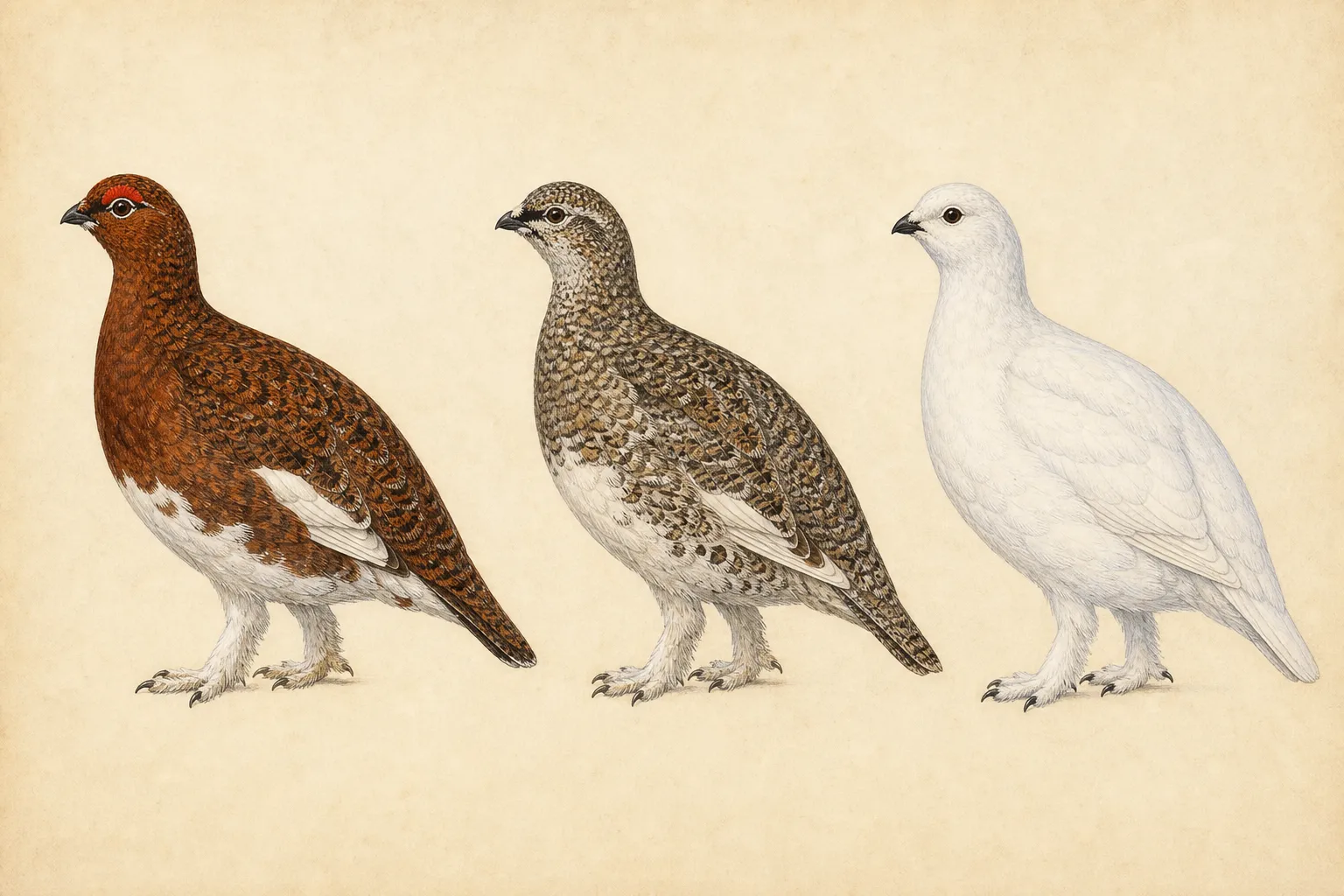
Birds flock up and molt toward white, which makes half-white ptarmigan on brown ground the most visible birds of the year.
- Glass hillsides for white spots before climbing
- Flocks drift downhill toward willow drainages as snow builds
- Flushes get longer as flocks grow, take the first fair chance
- Track lines in fresh snow lead straight to feeding birds
-
Late Season
Cold and snow
Winter packs of white birds live in willow flats and sheltered basins, and Alaska hunters follow them by ski and snowmachine.
- Hunt willow thickets along creek bottoms and lake edges
- Look for birds budding in willows at first and last light
- Fully white birds vanish in snow, watch for black eyes and bills
- Short days and deep cold make turnaround times a safety rule
Times of Day
When to be in the cover
Morning
Ptarmigan feed from first light on berries or willow buds, often in the open where glassing finds them fast.
Midday
Birds loaf in willow shade, talus, or snow hollows through midday and sit tighter than most grouse.
Evening
A strong evening feed pulls flocks back into the open before they roost in cover or under snow.
Tactics Box
Ptarmigan tactics that hold up
- Glass first in open country, ptarmigan show themselves at long range more than any forest grouse
- Hunt uphill in the morning so afternoon flushes push birds toward you, not over the ridge
- A close-working dog is a bonus, not a requirement, walked-up birds hold well
- Take a hiking pole and real boots, the terrain is the hard part of ptarmigan hunting
- Follow tracks and droppings in early snow, flocks telegraph their feeding lines
- Treat every alpine hunt like a mountaineering day, weather kills faster than any missed bird disappoints
FAQ
Ptarmigan questions, answered
What is a ptarmigan?
A ptarmigan is a small grouse of arctic and alpine country that turns white in winter and grows feathered feet that work like snowshoes. The p is silent, so it reads TAR-mi-gan. North America has three species, the willow ptarmigan, rock ptarmigan, and white-tailed ptarmigan, and all three are legal gamebirds where seasons exist. The willow ptarmigan is Alaska's state bird.
Where can you hunt ptarmigan?
Alaska is the destination for ptarmigan hunting, with willow and rock ptarmigan across most of the state, long seasons, and generous limits that vary by unit. In the lower 48, Colorado runs a fall season for white-tailed ptarmigan in its high country above treeline. Ptarmigan are also hunted widely across northern Canada. Check current regs for unit dates and limits wherever you go.
Do ptarmigan turn white in winter?
Yes, all three North American ptarmigan species molt from mottled brown or gray summer plumage into pure white winter plumage, with the change running through the fall. Willow and rock ptarmigan keep black tail feathers year-round, while the white-tailed ptarmigan is white-tailed in every season. The molt tracks day length rather than snowfall, so a half-white bird on bare ground is a common mid-fall sight.
What do ptarmigan eat in the fall?
In the fall, ptarmigan eat blueberries, crowberries, seeds, and green leaves on the tundra, then shift to willow and birch buds and twigs as snow buries the ground food. Willow buds are the backbone of the winter diet, which is why winter flocks pack into willow flats along creeks and lakes. Find the current food and you have found the birds.
What choke and shot size for ptarmigan?
Improved cylinder with lead 7.5s or 6s covers most ptarmigan hunting, and a light 20 gauge is plenty for these three-quarter to pound-and-a-half birds. Early-season birds hold tight and die easily, while late-season flocks flush farther and justify 6s and a modified choke. Weight matters on mountain hunts, so carry the lightest gun you shoot well.