



What is a greater prairie chicken?
A greater prairie chicken (Tympanuchus cupido) is a heavily barred prairie grouse of the tallgrass and mixed-grass plains, famous for the booming display males perform on spring leks. It survives today in strongholds like the Kansas Flint Hills and Nebraska Sandhills, and it remains a legal, huntable gamebird in a handful of states.
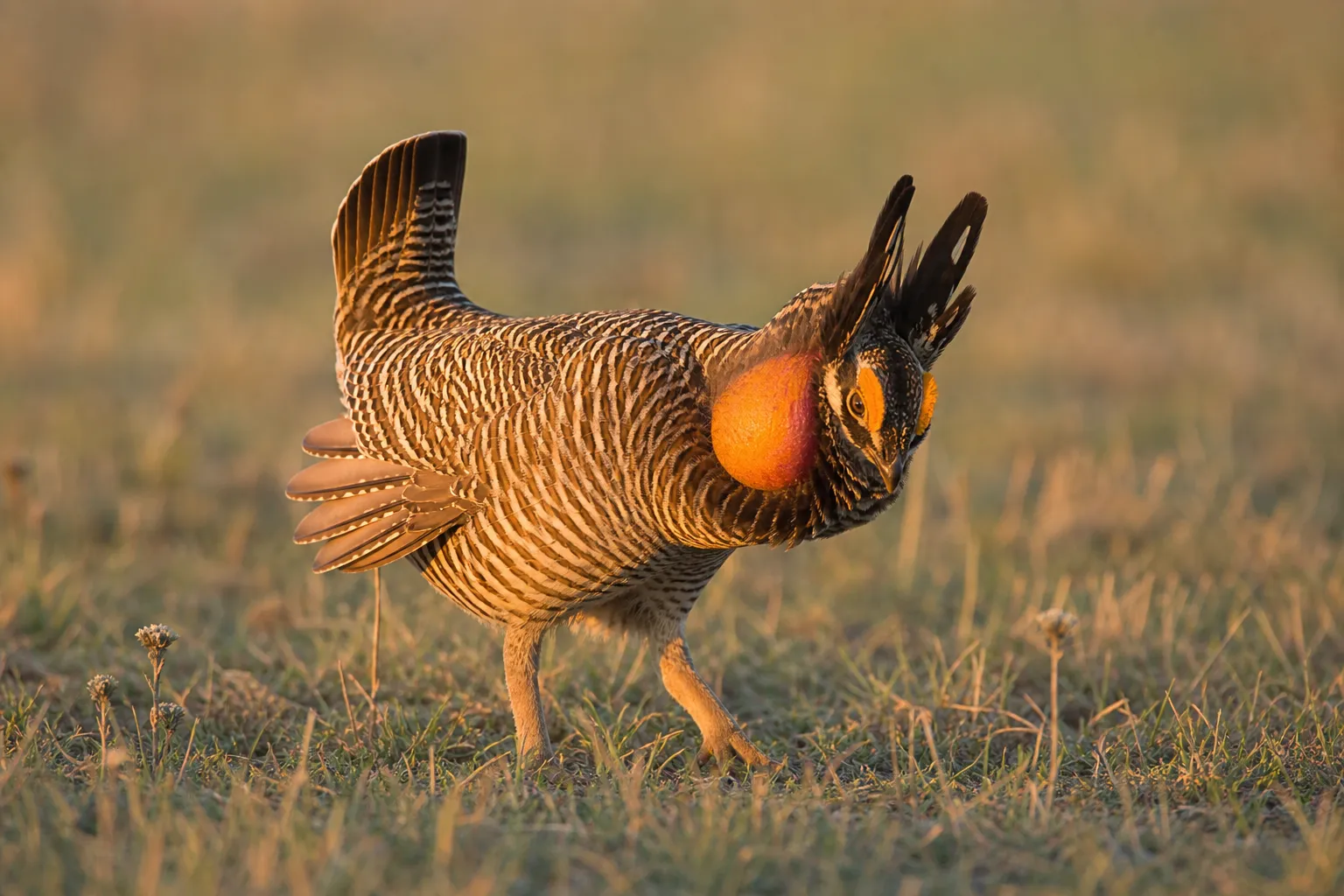
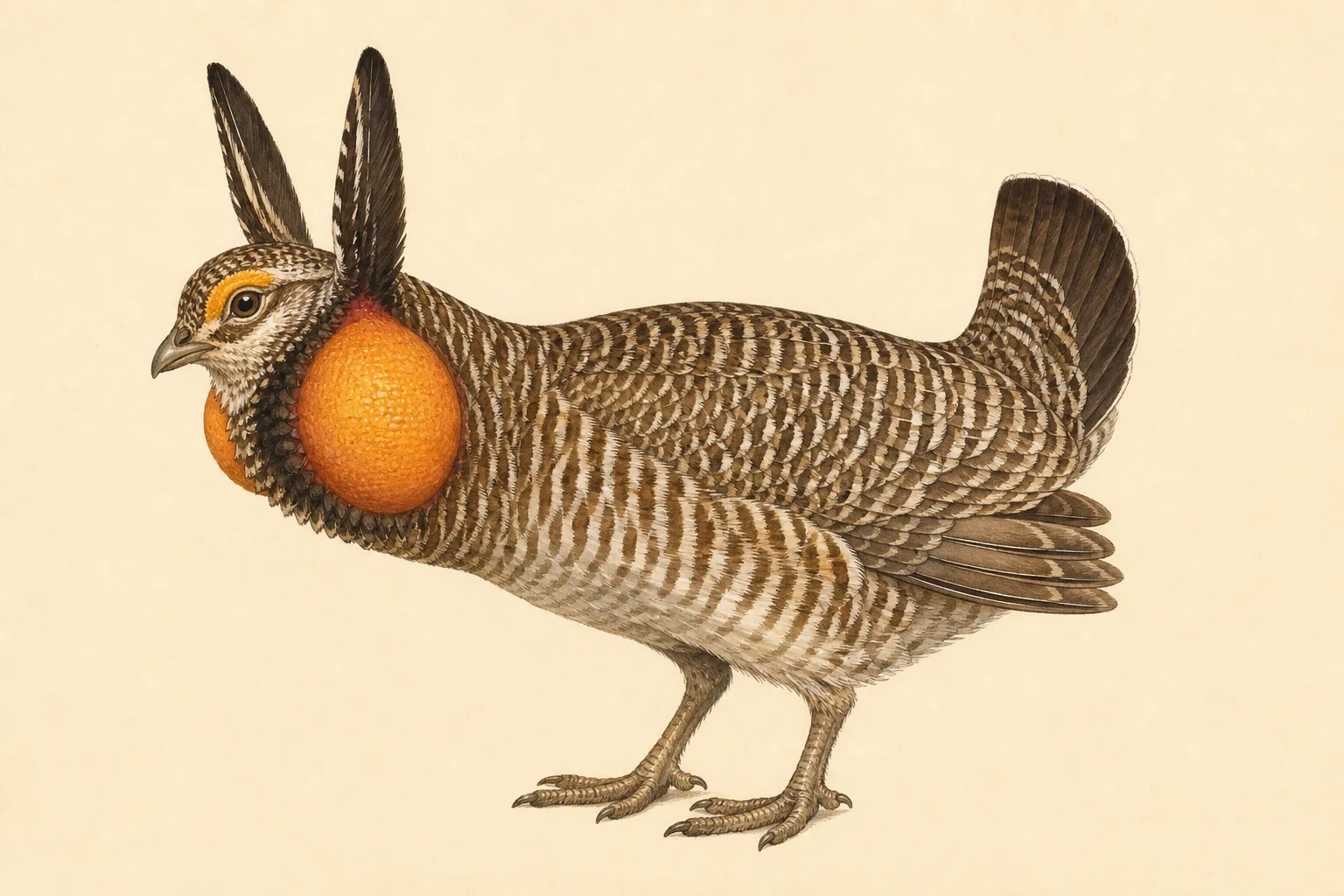
In hand or in the air, the bird reads as a study in stripes. Dark horizontal barring runs the full length of a pale body, the tail is short, rounded, and dark, and the whole bird looks stockier than a sharptail. Males carry two field marks that made the species famous. Long neck feathers called pinnae stand up like rabbit ears during display, and bare orange air sacs on the neck inflate to pump out the boom. Hens show the same barring with shorter pinnae. Old-time prairie hunters simply called them chickens, and in the Flint Hills they still do.
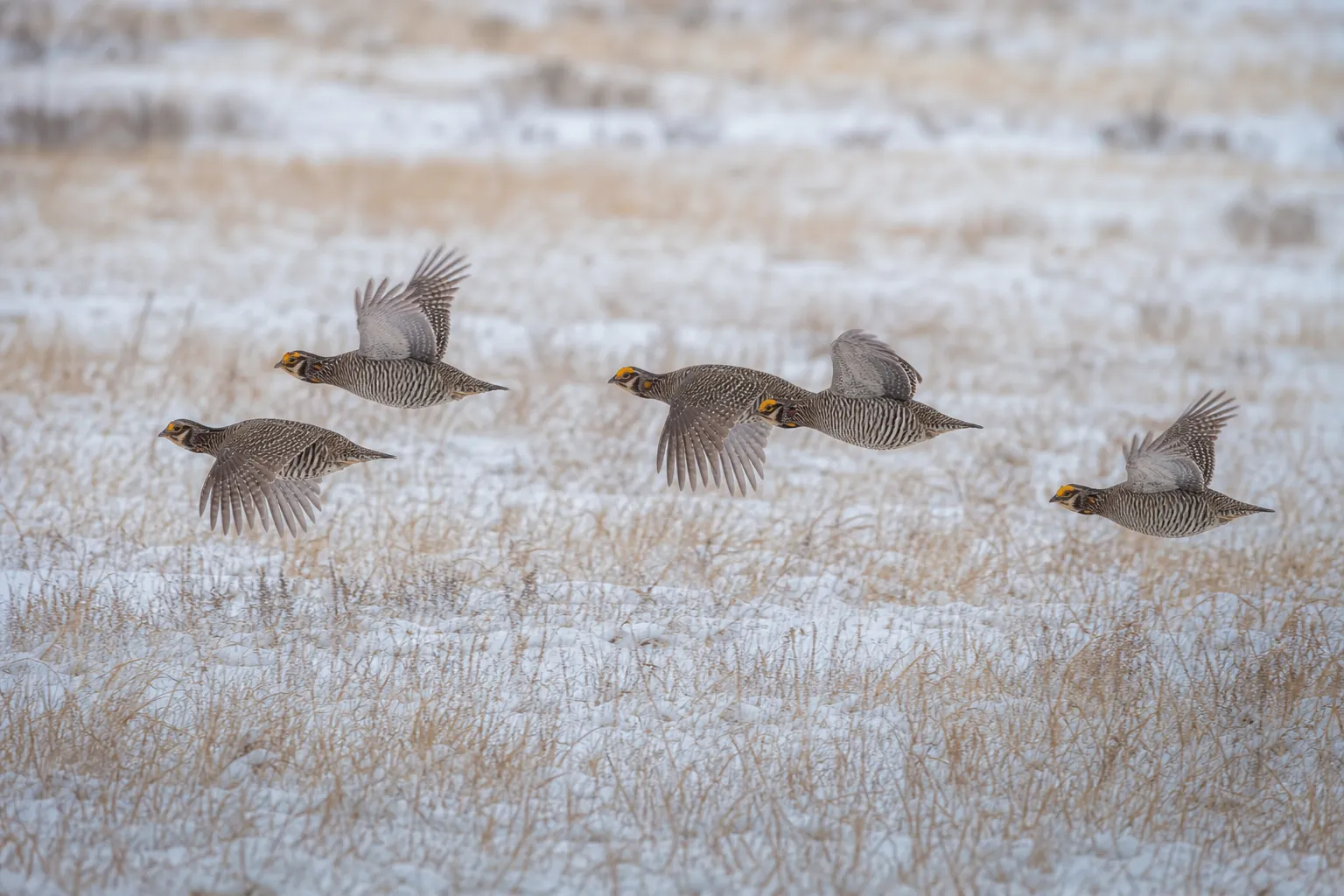
The boom is the sound most people know, a low, hollow, three-note moan from the spring lek that carries more than a mile on still mornings. In the fall you will hear cackles and clucks on the flush and the steady beat of stiff wings as a flock lifts off and glides away over the grass.
Like the sharptail, the greater prairie chicken is a covey and flock bird. Small family groups in early fall build into larger winter flocks that feed on a daily commute and flush at distances that humble a grouse-woods hunter. The habit rewards patience and punishes the hunter who tries to march straight into open grass. Reading the land and the food matters more than covering miles blind.
What do greater prairie chickens eat?
Greater prairie chickens eat insects, green forbs, and prairie seeds through the warm months, then shift steadily to waste grain like corn, sorghum, and wheat as freezes shut down the soft food. Grasshoppers matter most in September. Grain fields near big native grass matter most from mid fall on.
That progression drives where you find birds. Early-season broods and small flocks stay in the grass because everything they need is there. Once flocks build and the hoppers die off, prairie chickens become commuters, roosting and loafing in native prairie and flying out to feed fields in the first and last hours of light. Rose hips, buds, and leftover seedheads carry them through the leanest stretches, but standing or waste grain is the magnet where it exists.
For the table, prairie chicken is dark meat like its sharptail cousin. It cooks like duck and takes a sear far better than an oven. Cool the birds fast in warm early-season weather, pluck rather than skin when you have the patience, and serve the breast pink. Handled that way, a young prairie chicken eats as well as any wild bird on the plains.
Where do you find greater prairie chickens?
Kansas, Nebraska, and South Dakota are the three states with real prairie chicken hunting, and each has a signature landscape. Kansas has the Flint Hills and Smoky Hills, Nebraska has the Sandhills, and South Dakota has the central grasslands, including the Fort Pierre National Grassland. Minnesota holds birds in its northwest but limits hunting to a small permit draw.
The habitat requirement is simple to say and big to walk. Greater prairie chickens need large, unbroken native grassland, with grain fields nearby earning bonus points from mid fall onward. Small, fragmented grass patches rarely hold them. Look for wide-open range country, lightly grazed pastures with good residual grass, and the seams where prairie meets crop ground.
Public access is better than most traveling hunters expect. Kansas walk-in hunting areas, Nebraska’s open fields program, South Dakota walk-in areas, and the national grasslands together open millions of acres of chicken country. For the state-by-state breakdown of seasons and access, start with our where to hunt grouse and prairie birds guide.
Prairie chicken hunters should also read up on the sharp-tailed grouse, which shares range in Nebraska and South Dakota and often shows up in the same day’s bag, and the lesser prairie chicken, the closed-season cousin every plains hunter must be able to identify. When it is time to pick a gun for open-country flushes, our 12 vs 20 vs 16 gauge grouse gun comparison walks through the weight and payload tradeoffs that matter out here.
Field Marks
How to know a greater prairie chicken
- Heavy dark barring across the whole body
- Rounded dark tail, unlike the sharptail’s pointed white one
- Males inflate bright orange air sacs when booming
- Long ear-like pinnae feathers raised over the head in display
- Stockier and darker than a sharp-tailed grouse
The Season Arc
How the Greater Prairie Chicken season unfolds
-
Early Season
Opener to leaf-drop
Broods and small flocks work green draws, forb patches, and grasshopper-rich grass, holding better for dogs than they will all year.
- Hunt native grass near recently grazed or hayed patches where hoppers stack up
- September birds sit for points, so this is the window for close dog work
- Beat the heat with dawn starts and plenty of dog water
- Expect flocks to flush together, then scatter into holdable singles
-
Mid Season
Leaf-off
Flocks build and start trading between grain fields and native grass on a daily schedule.
- Pattern the morning flight from roost grass to crop edges
- Set up on fence lines and rises along the flight path
- Longer flushes now, so tighten chokes and step up shot size
- Wind moves birds into lee slopes and heavier grass
-
Late Season
Cold and snow
Big winter packs feed hard on waste grain and flush far ahead, making pass-shooting and long walks the honest options.
- Glass feed fields at first light before committing to a walk
- Packs of 30 or more birds rarely hold for a dog
- Use terrain to close distance, not open marching
- One careful chance a day is a realistic late-season budget
Times of Day
When to be in the cover
Morning
Prairie chickens fly from grass roosts to feed at first light. The morning feed, in stubble or forb-rich grass, is the day's best window.
Midday
Birds loaf in taller native grass on slopes and ridge shoulders. Slow midday dog work through loafing grass can produce close flushes.
Evening
An afternoon feed builds toward sunset, with birds flying back to roost grass at dusk. The last hour mirrors the first.
Tactics Box
Greater Prairie Chicken tactics that hold up
- Cover ground with a wide-running dog early, then shrink your circles once you find birds
- Watch scattered flocks down after a flush and hunt the singles hard
- On windy days, work the downwind lee of hills where birds tuck in
- Pattern feed-field flights in mid season and be in position before legal light ends or begins
- Bring a modified choke and heavier loads once flushes stretch past 30 yards
- Treat every long walk as dog conditioning too, prairie chickens make you earn it
FAQ
Greater Prairie Chicken questions, answered
Can you hunt prairie chickens?
Yes, you can hunt greater prairie chickens today in Kansas, Nebraska, and South Dakota, which run regular fall seasons, and Minnesota offers a small limited-permit hunt. The lesser prairie chicken is a different story, closed across its range under Endangered Species Act protection. Season dates, zones, and bag limits change, so check current regs before you go.
What is a booming ground?
A booming ground, also called a lek, is a traditional patch of open prairie where male greater prairie chickens gather each spring to display for hens. Males inflate orange air sacs on their necks, raise ear-like feathers called pinnae, stamp their feet, and produce a low three-note booming that carries a mile or more. Birds return to the same grounds year after year, which makes leks a cornerstone of both conservation work and spring wildlife watching.
Where is the best prairie chicken hunting in the US?
The Kansas Flint Hills and Smoky Hills, the Nebraska Sandhills, and the grasslands of central South Dakota offer the best greater prairie chicken hunting in the country. All three states pair huntable populations with strong walk-in access programs. Minnesota's northwest prairie holds birds but limits hunting to a small permit drawing. Check current regs for zones and dates.
What do prairie chickens eat in the fall?
In the fall, greater prairie chickens eat grasshoppers and other insects, green forbs, prairie seeds, and rose hips, then lean harder on waste grain like corn, sorghum, and wheat as cold kills the soft food. That shift is why early-season birds sit in native grass and late-season birds commute to crop fields. Find the current food and you find the flock.
What is the best time of day to hunt prairie chickens?
Early morning is the best time of day to hunt prairie chickens, when birds leave roost grass to feed and hold better for dogs. The final hour of light is nearly as good as birds feed again and fly to roost. Midday hunting means slow work through the taller loafing grass on slopes and ridges.
What choke and shot size for prairie chickens?
Improved cylinder with lead 7.5s or 6s handles early-season prairie chickens over points, and modified with 6s or 5s is the better answer once flocks flush wild at 30 yards and beyond. They are sturdy, duck-sized birds and shots run longer than in the grouse woods. Bring more choke and shot than you would for ruffed grouse.