


What is a ruffed grouse?
The ruffed grouse (Bonasa umbellus) is a chicken-sized forest bird and the most widely hunted grouse in North America. It weighs 1 to 1.5 pounds, wears mottled brown or gray camouflage, and explodes from cover with a wing roar that stops your heart. If you hunt the Northwoods, this is the bird.
One callout worth knowing: in the Northwoods, partridge means ruffed grouse. Walk into a bar in northern Minnesota and ask about partridge hunting, and everyone knows exactly which bird you mean.
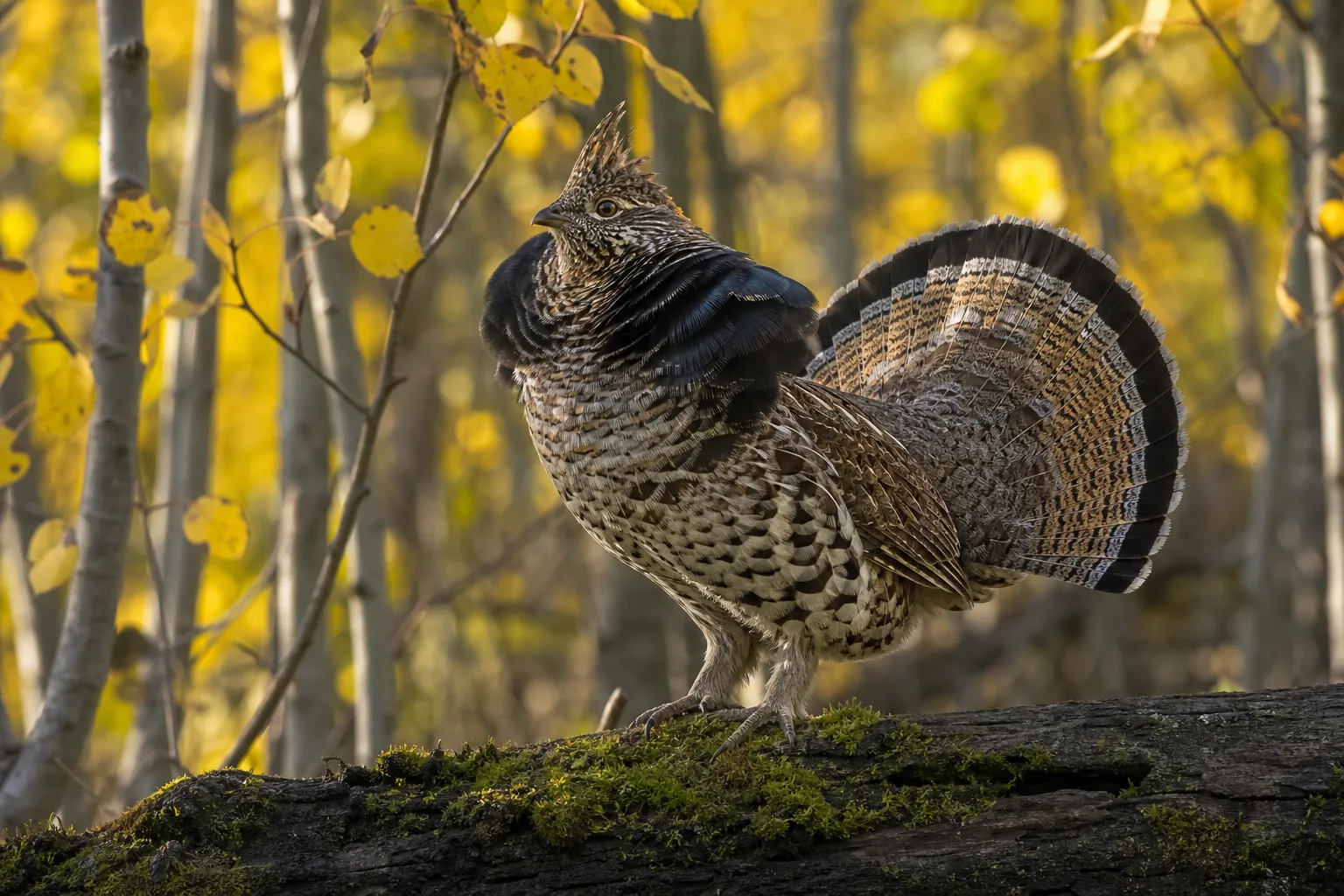
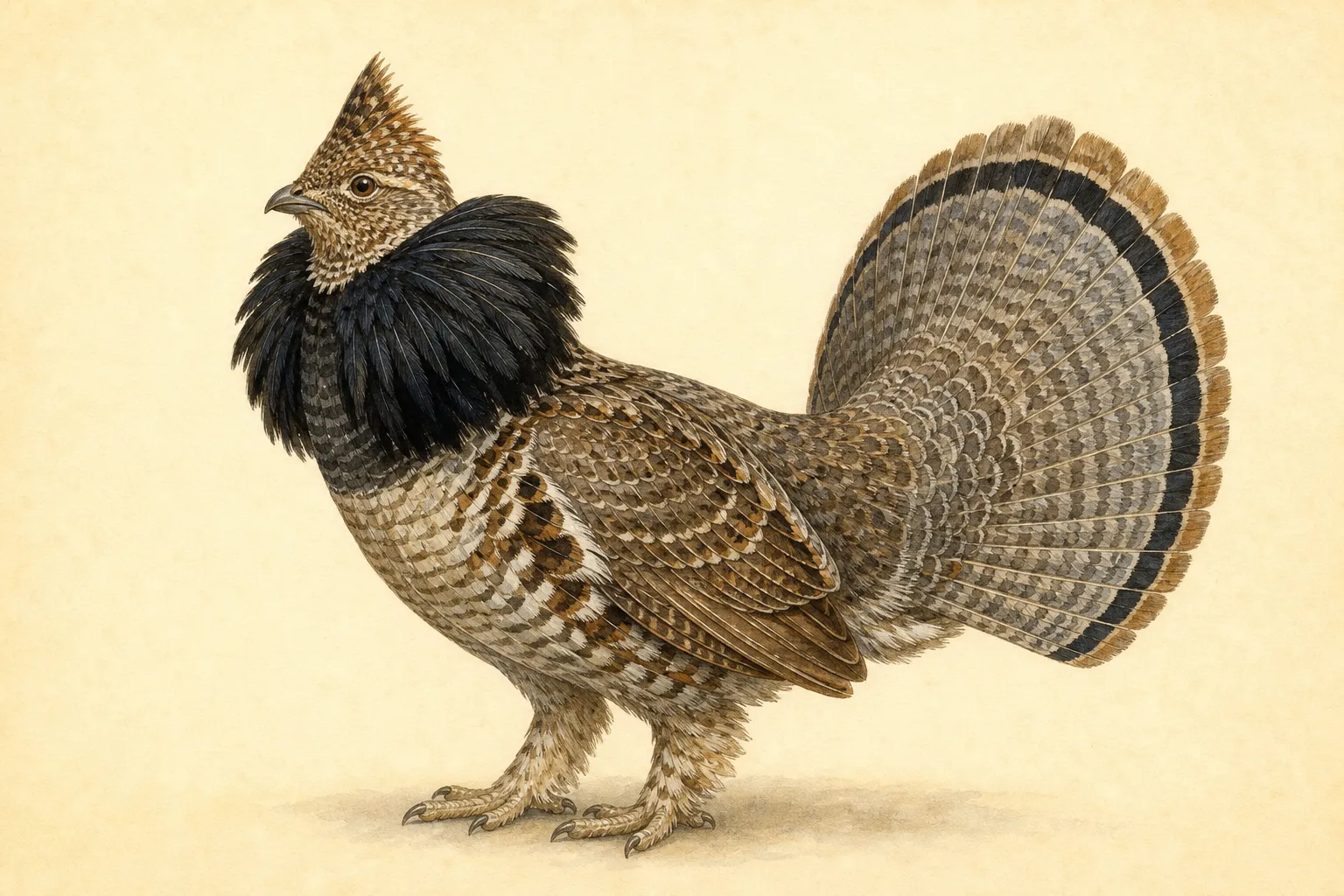
Look for the namesake ruff, a collar of dark feathers on the neck, and a fan-shaped tail with a dark band near the tip. Males and females look alike at a glance. A full, unbroken tail band usually means a male and a broken band usually means a hen, though it is not foolproof. Birds come in gray and red color phases, with gray more common in the north.
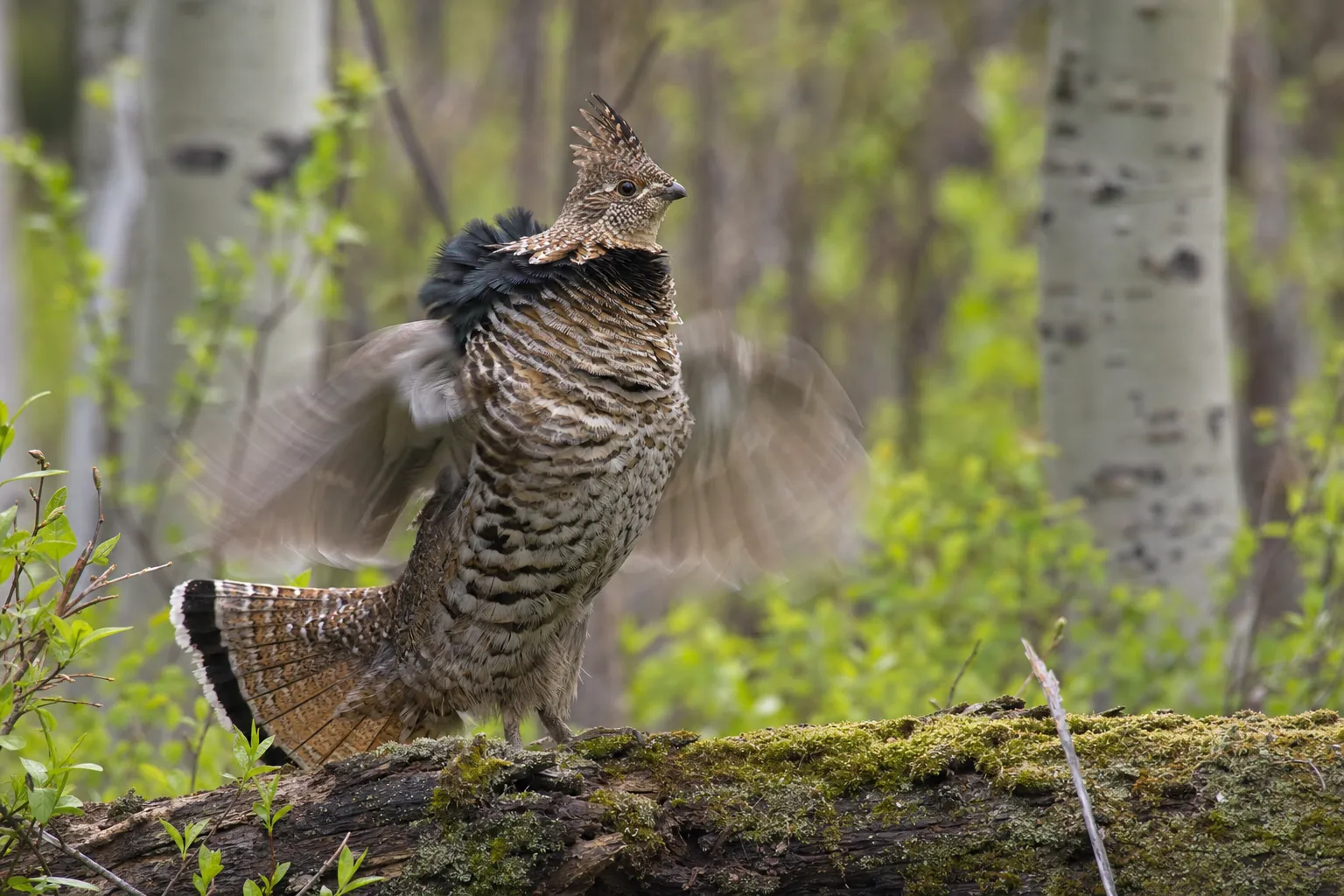
The signature sound is drumming. A male stands on a log and beats his wings in an accelerating thump that sounds like a distant engine starting. You feel it in your chest before you place the direction. Flushing birds also give a sharp wing roar, and alarmed grouse make a quick putt-putt call on the ground.
Grouse numbers in the Lake States rise and fall on a roughly 10-year population cycle. Some falls the woods are full of birds and some falls they are thin. The birds never disappear, but knowing where your region sits in the cycle sets honest expectations. The ruffed grouse is also Pennsylvania’s state bird, a nod to how deep this bird runs in American forest hunting.
What do ruffed grouse eat?
Ruffed grouse eat whatever the forest serves in season: insects and soft mast early, dogwood and wild grape in mid fall, and aspen buds once winter shuts everything else down. Diet drives everything in grouse hunting. Find the current food and you find the birds.
Chicks live on insects through summer, and early-season birds still pick grasshoppers and beetles along sunny trails. September birds work clover on old logging roads, blackberries, and other soft mast in the lowlands. As leaves drop, the menu shifts to gray dogwood berries, wild grape, thornapple, and the catkins of hazel and birch.
Late season belongs to aspen. The flower buds of mature male quaking aspen are the winter staple across the northern range, and a flock of grouse budding in a bare treetop at dusk is a classic Northwoods sight. This is the heart of aspen ecology for hunters. Young aspen stands give grouse dense escape cover, and nearby mature aspen gives them winter food. Where the two meet, grouse live. When deep powder snow arrives, birds dive into it and roost under the surface, insulated from the cold and hidden from owls.
Where do you find ruffed grouse?
The best ruffed grouse hunting in the country is in Minnesota, Wisconsin, and Michigan, the Big Three, where millions of acres of public aspen forest hold the highest harvests in the nation. Maine, New Hampshire, and the rest of northern New England are close behind, and Pennsylvania and the Appalachians carry the southern tradition.
Ruffed grouse are huntable in more than 30 states, but bird density tracks young forest. Target aspen stands roughly 5 to 20 years old, alder runs along creek bottoms, old log landings grown up in brush, and any edge where thick young growth meets a food source. National forests, county forests, and state wildlife management areas in the Lake States offer more public grouse cover than one hunter can walk in a lifetime. Many states also map hunter walking trails through managed grouse habitat.
Seasons in the Big Three generally run from mid September into the winter months, and other states vary widely. Always check current regs for exact dates and bag limits before you go. For state-by-state breakdowns and where to start, see our guide to where to hunt grouse.
If you hunt ruffed grouse country, you may cross paths with the spruce grouse, the tame conifer bird that shares the northern woods. Out West, the dusky grouse, the bird hunters still call blue grouse, fills a similar role on mountain ridges. And before opening day, settle the gun question with our comparison of 12 vs 20 vs 16 gauge for the grouse woods.
Field Marks
How to know a ruffed grouse
- Black ruff of feathers on the neck, flared wide in display
- Fan-shaped tail with a dark band near the tip
- Small crest that raises when the bird is alert
- Two color phases, gray and red, with gray more common in the north
- Chicken-sized: 1 to 1.5 pounds
The Season Arc
How the Ruffed Grouse season unfolds
-
Early Season
Opener to leaf-drop
Birds hold in food-rich edge cover near broods and soft mast, and the thick leaves make them sit tight and flush close.
- Work alder runs, berry patches, and old logging trails where clover still grows.
- Broods are still loosely grouped, so a second flush often waits nearby.
- Leaves are up, so take the fast, obscured shot or you will not shoot at all.
- Hunt near water and lowland edges in warm early-season weather.
-
Mid Season
Leaf-off
Leaf-off changes everything, because birds can see you coming and shift toward dogwood, grape tangles, and heavier stem density.
- Flushes get longer, so slow your pace and pause often to make nervous birds break.
- Target catkin-bearing cover like hazel and birch alongside remaining soft mast.
- Focus on stem-dense young aspen stands that screen birds from raptors.
- Midday birds loaf in slightly heavier cover than they fed in at dawn.
-
Late Season
Cold and snow
Cold pushes birds into conifer thermal cover and budding aspen, and their daily pattern tightens to short feeding windows.
- Hunt the edge where spruce or fir thermal cover meets mature male aspen.
- Look for birds budding in bare treetops late in the afternoon.
- After deep powder snow, expect birds to burst from snow roosts underfoot.
- Track fresh grouse sign along south-facing edges on sunny days.
Times of Day
When to be in the cover
Morning
Birds move to feed shortly after first light, picking along edges, trails, and openings. Start on the food, not deep in the thick stuff.
Midday
Grouse loaf in thicker, safer cover between feeds. Slow down and grind through stem-dense young growth and conifer pockets.
Evening
The evening feed is the most reliable movement of the day. Work food edges and trail systems in the last two hours of light.
Tactics Box
Ruffed Grouse tactics that hold up
- Hunt with a close-working grouse dog, because a wide dog bumps birds out of range in thick cover.
- Walk a few steps, then stop. The pause makes tight-holding birds lose their nerve and flush.
- Pick your shooting lanes before the flush, and move toward openings as the dog gets birdy.
- Follow up single flushes. A ruffed grouse rarely flies far, and reflushes are often closer.
- Carry a light, open-choked gun you can swing fast in cover.
- Cover edges, not acres. Grouse live where two cover types meet.
FAQ
Ruffed Grouse questions, answered
What do ruffed grouse eat?
Ruffed grouse eat green leaves, clover, berries, catkins, and insects through fall, then rely heavily on the flower buds of male aspen in winter. Chicks feed almost entirely on insects. As leaves drop, birds shift to dogwood berries, wild grape, and hazel catkins. That aspen bud diet is why the best grouse woods are aspen woods.
Are ruffed grouse good to eat?
Yes, ruffed grouse are widely considered the best-eating grouse in North America, with pale, mild breast meat closer to fine chicken than to any dark game bird. Their varied diet of buds, greens, and berries keeps the flavor clean. Cook the breast gently and serve it slightly pink so it does not dry out.
Do ruffed grouse migrate?
No, ruffed grouse do not migrate. A bird often lives its whole life within a small home range of forest cover. Instead of leaving in winter, they switch to budding aspen for food and burrow into powder snow to stay warm. Young birds do disperse short distances in fall, which hunters call the fall shuffle.
Why do ruffed grouse drum?
Male ruffed grouse drum to claim territory and attract hens, beating their wings against the air fast enough to create a deep thumping sound. The bird stands on a log or rock and the wingbeats compress air, not the log itself. Drumming peaks in spring but you can hear it in fall too.
Why is the ruffed grouse Pennsylvania's state bird?
Pennsylvania named the ruffed grouse its state bird in 1931 because the bird is a native symbol of the state's forests and its deep hunting tradition. The grouse thrived in the young forests that regrew after the state's logging era. It remains the classic game bird of the Appalachian ridges.