


What is a sharp-tailed grouse?
A sharp-tailed grouse (Tympanuchus phasianellus) is a chicken-sized prairie grouse named for its narrow, pointed tail. It lives in the grassland and brush country of the northern plains, gathers on dancing grounds called leks each spring, and runs in coveys through the fall. Most hunters just call them sharptails or sharpies.
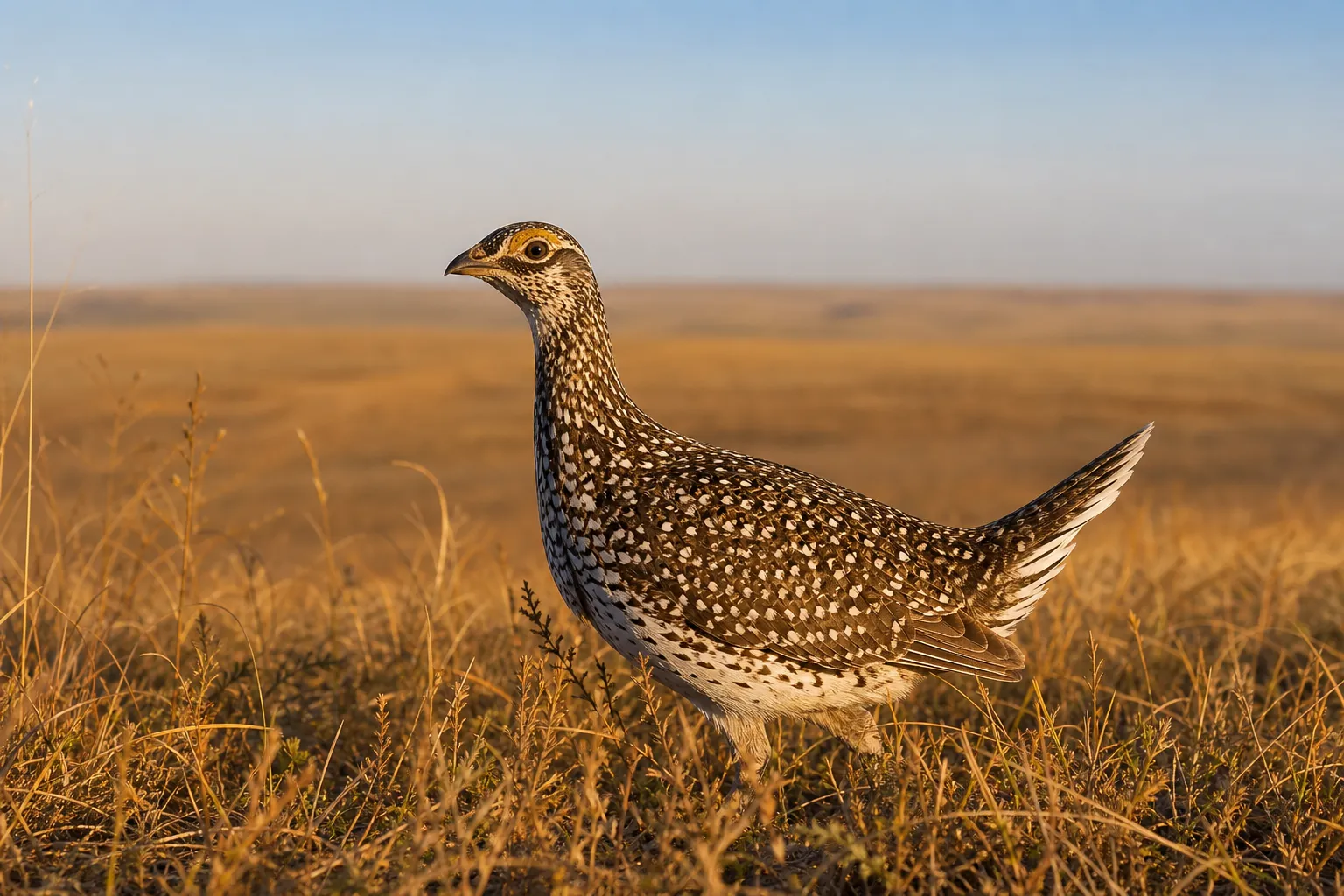
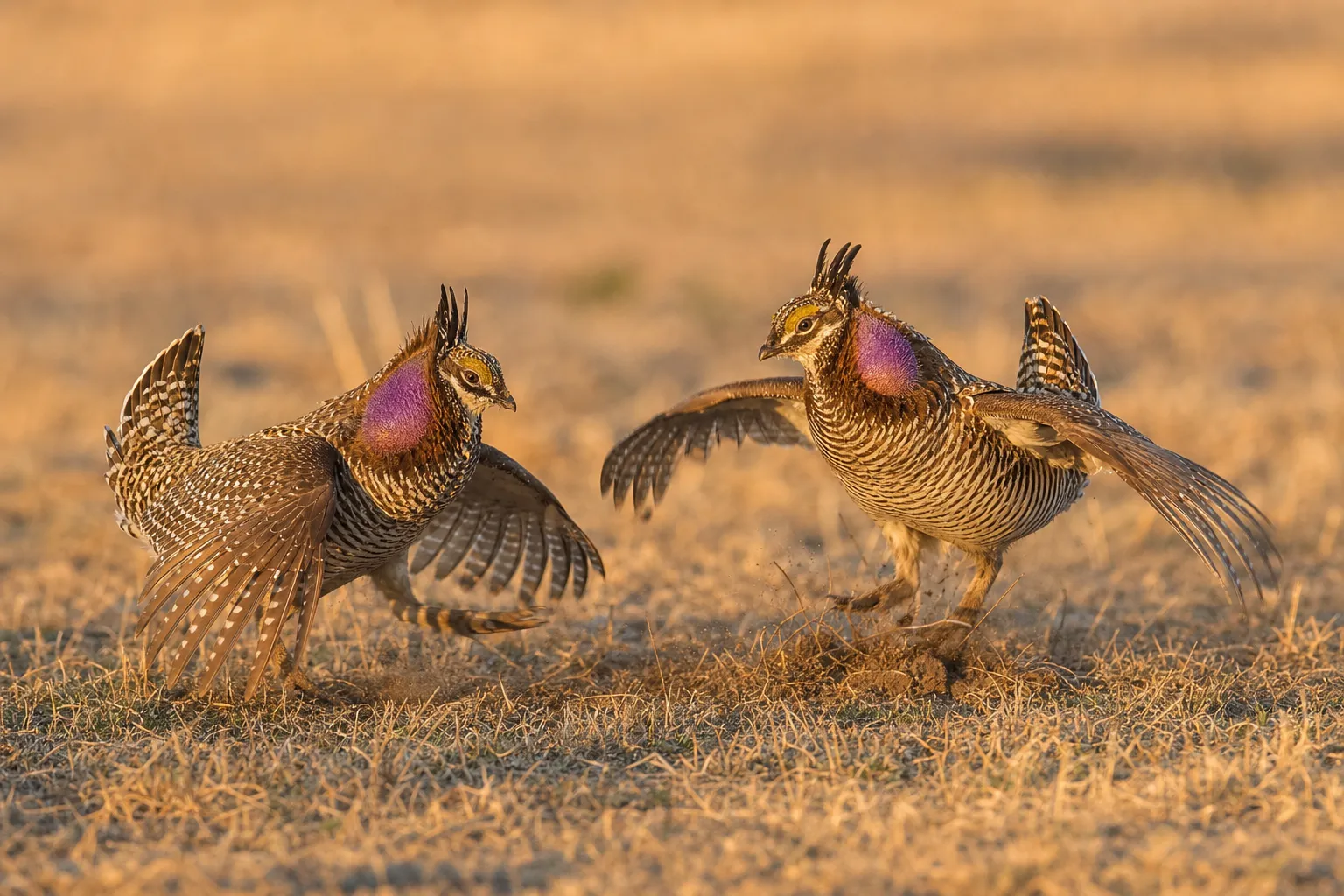
Look for a pale, speckled bird in browns, buffs, and white, with V-shaped dark marks down the breast and a white-edged tail that shows plainly in flight. Males and females look nearly identical in the field. On the spring lek, males give themselves away with purple neck patches and yellow eye combs while they stamp their feet, rattle their tail feathers, and coo in a display hunters drive hours to watch. In the fall you will know them by sound before anything else. A flushing sharptail clucks a fast “chuk-chuk-chuk” as it goes, and a covey rise sounds like a squadron leaving in waves.
Sharptails are covey birds. Family groups of five to fifteen hold together through early fall, then merge into winter packs that can top thirty birds. That grouping habit shapes every stage of the season, from tight September points to wild November flushes. When a covey lifts, the birds go in waves rather than all at once, which is both the thrill and the trap of hunting them. A hunter who fixates on the first bird up usually watches the rest leave unshot.
Males and females run so alike that most hunters age birds by wing feathers at the truck rather than sexing them in the field. What sets the sharptail apart from its prairie chicken neighbor is the tail. It is short, pointed, and edged in white, and it flashes plainly as a bird quarters away.
One more thing worth knowing before the bird hits the grill. Sharptail is dark meat. It cooks like duck, not like the pale breast of a ruffed grouse, and it rewards a hot sear and a pink middle.
What do sharp-tailed grouse eat?
Sharp-tailed grouse eat what the prairie serves in season. Summer and early fall mean grasshoppers, green forbs, and berries. Mid fall means waste grain and seeds. Winter means buds and catkins picked from brush and trees. Track the food and you track the birds, because the flock moves with the menu.
In September, work anything holding fruit. Buffaloberry, snowberry, chokecherry, and wild rose draws pull birds off the open grass, and hoppers keep them in green edges through warm afternoons. As frosts stack up, coveys shift to wheat stubble and other harvested grain, trading between crop edges and native grass through the day.
By late season the soft food is gone and sharptails become budders. They fly into brush patches, shelterbelts, and scattered hardwoods at first light to clip buds and catkins, then loaf in heavy cover. A lone tree line full of birds at dawn is a late-season pattern worth setting an alarm for.
Where do you find sharp-tailed grouse?
North Dakota, South Dakota, and Montana are the heart of sharptail country, and all three pair strong bird numbers with generous public access. Nebraska’s Sandhills, southern Idaho, and eastern Wyoming round out the lower-48 options, Minnesota holds birds in its northwest brushlands, and interior Alaska has them in surprising numbers.
Inside that range, hunt the mosaic. Sharptails want grassland broken up by brushy draws, berry thickets, and the edges of cropland, not endless open grass and not solid brush. A rough rule is grass with brush stitched through it, hilly enough to give you terrain to work.
On public ground, start with the national grasslands of the Dakotas, PLOTS tracts in North Dakota, walk-in areas in South Dakota and Montana, and BLM land across the west. Wisconsin manages a small population with tightly limited or closed hunting, and Minnesota restricts sharptails to part of the state, so check current regs closely in both. For state-by-state detail on seasons and access programs, see our state-by-state grouse hunting guide.
If sharptails have your attention, the greater prairie chicken shares much of the same country and shows up in mixed bags in Nebraska and South Dakota, and the greater sage-grouse waits farther west in the big sage. For the gun question, our 12 vs 20 vs 16 gauge comparison for grouse hunters covers the tradeoffs, and prairie distances tilt the math a little differently than the grouse woods do.
Field Marks
How to know a sharp-tailed grouse
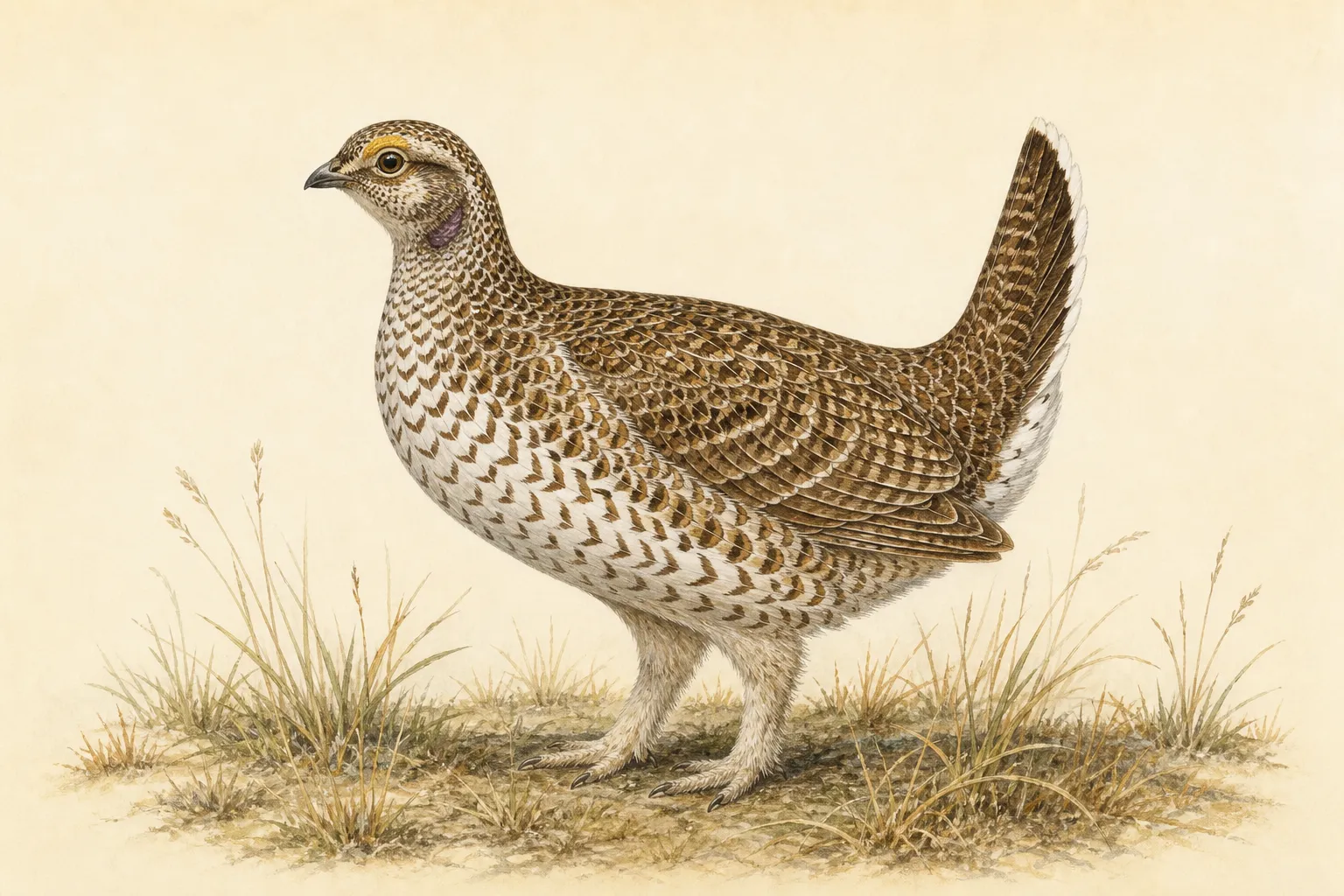
- Short, pointed tail edged in white, obvious in flight
- V-shaped brown marks on white breast feathers
- Feathered legs down to the toes
- Males show a pale purple neck patch on the dancing grounds
- Whiter belly than a prairie-chicken at a distance
The Season Arc
How the Sharp-tailed Grouse season unfolds
-
Early Season
Opener to leaf-drop
Family coveys hold near berry patches, green draws, and brushy edges where food and shade sit close together.
- Work buffaloberry and chokecherry thickets on the edge of grass
- Birds hold well for pointing dogs in September heat
- Carry water for the dog and hunt the cool hours
- Expect coveys of 5 to 15 birds that flush in waves
-
Mid Season
Leaf-off
Coveys pack up and shift toward grain stubble and heavier brush as frost knocks down the forbs.
- Hunt the seams between stubble fields and native grass
- Flushes get longer, so keep the dog closer
- Follow single birds after the covey rise, they often sit tight
- Glass distant rises and mark where birds set their wings
-
Late Season
Cold and snow
Big winter packs feed on buds and catkins, flush wild, and demand long walks for few chances.
- Look for birds budding in brush and scattered trees at first light
- Packs of 20 or more birds rarely let you inside 40 yards
- Use terrain like coulees and hills to break your outline
- Take the first honest shot, there is rarely a second
Times of Day
When to be in the cover
Morning
Sharptails feed early on grassy ridges, stubble, and berry edges. The first two hours are the most forgiving of the day.
Midday
Birds loaf in taller brush, shaded coulees, and thick grass. Midday hunting means slow, close work through loafing cover.
Evening
The evening feed pulls birds back to open grass and grain edges in the last hours of light.
Tactics Box
Sharp-tailed Grouse tactics that hold up
- Hunt the mosaic, not the open grass. Sharptails want roughly one part brush to two parts grassland
- Let a pointing dog run. Prairie birds reward a wider search than grouse woods dogs are used to
- After a covey flush, watch the birds down and hunt the singles
- Shoot the trailing bird first on a wave flush, then swing to the next
- Bring boots for miles. Ten-mile days are normal sharptail hunting
- Mark every water source and shade patch for the dog before you park the truck
FAQ
Sharp-tailed Grouse questions, answered
What is the difference between a sharp-tailed grouse and a prairie chicken?
A sharp-tailed grouse has a narrow, pointed tail edged in white and V-shaped marks on its breast, while a prairie chicken has a short, rounded, dark tail and heavy horizontal barring across its whole underside. On spring leks, sharptail males show purple neck patches and prairie chickens show orange. Sharptails also lean on brushier cover, while prairie chickens favor open native grassland. The two overlap in the Dakotas and Nebraska and sometimes hybridize.
Where is the best sharp-tailed grouse hunting in the US?
North Dakota, South Dakota, and Montana offer the best sharp-tailed grouse hunting in the country, with strong bird numbers and huge acreages of public and walk-in ground. Nebraska's Sandhills, southern Idaho, and eastern Wyoming are solid second-tier options. Alaska holds good numbers in its interior. Check current regs before you plan a trip.
What do sharp-tailed grouse eat in the fall?
In the fall, sharp-tailed grouse eat berries like buffaloberry, snowberry, chokecherry, and rose hips, along with grasshoppers, green forbs, and waste grain from wheat and other stubble fields. As frost kills the soft food, they shift toward grain and then to buds and catkins. Finding the current food source is most of the game.
What is the best time of day to hunt sharp-tailed grouse?
Early morning is the best time of day to hunt sharp-tailed grouse, when birds feed on grassy ridges and field edges and hold better for dogs. The last two hours of light are a close second as birds return to feed. Midday birds loaf in brush and shade and take slower, closer work.
What choke and shot size for sharp-tailed grouse?
Improved cylinder and modified chokes with lead 6s or 7.5s cover most sharp-tailed grouse hunting, with 6s or 5s earning their keep late in the year when flushes stretch out. Early-season birds over points can be taken with open chokes and smaller shot. Sharptails are bigger than ruffed grouse and shots average longer, so do not go too light.