



What is a lesser prairie chicken?
Start with the fact that matters most. The lesser prairie chicken (Tympanuchus pallidicinctus) is not currently huntable anywhere. Hunting is closed across its entire five-state range following its listing under the Endangered Species Act. This page exists so you know the bird, its status, and how to avoid mistaking it for its legal cousin.
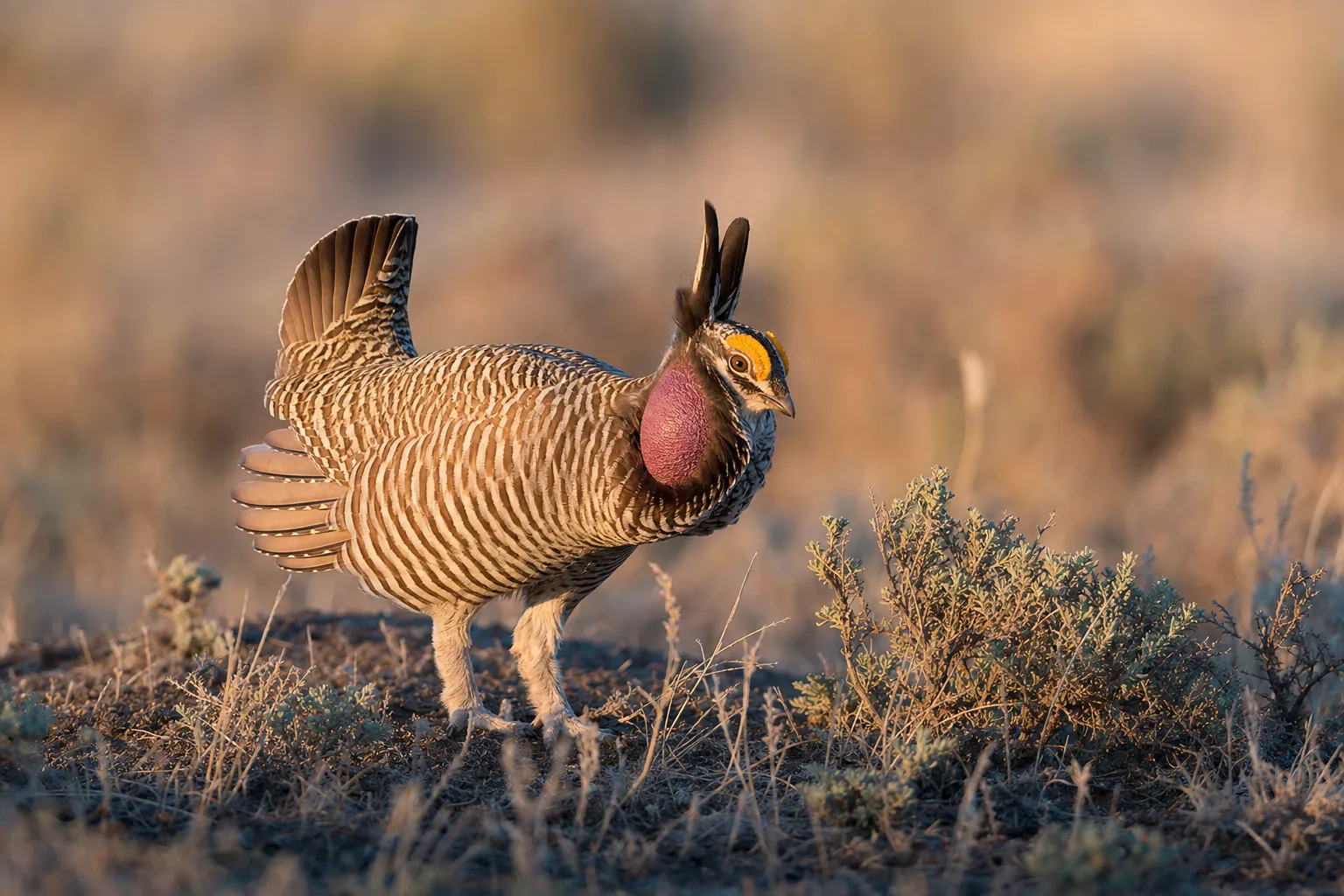
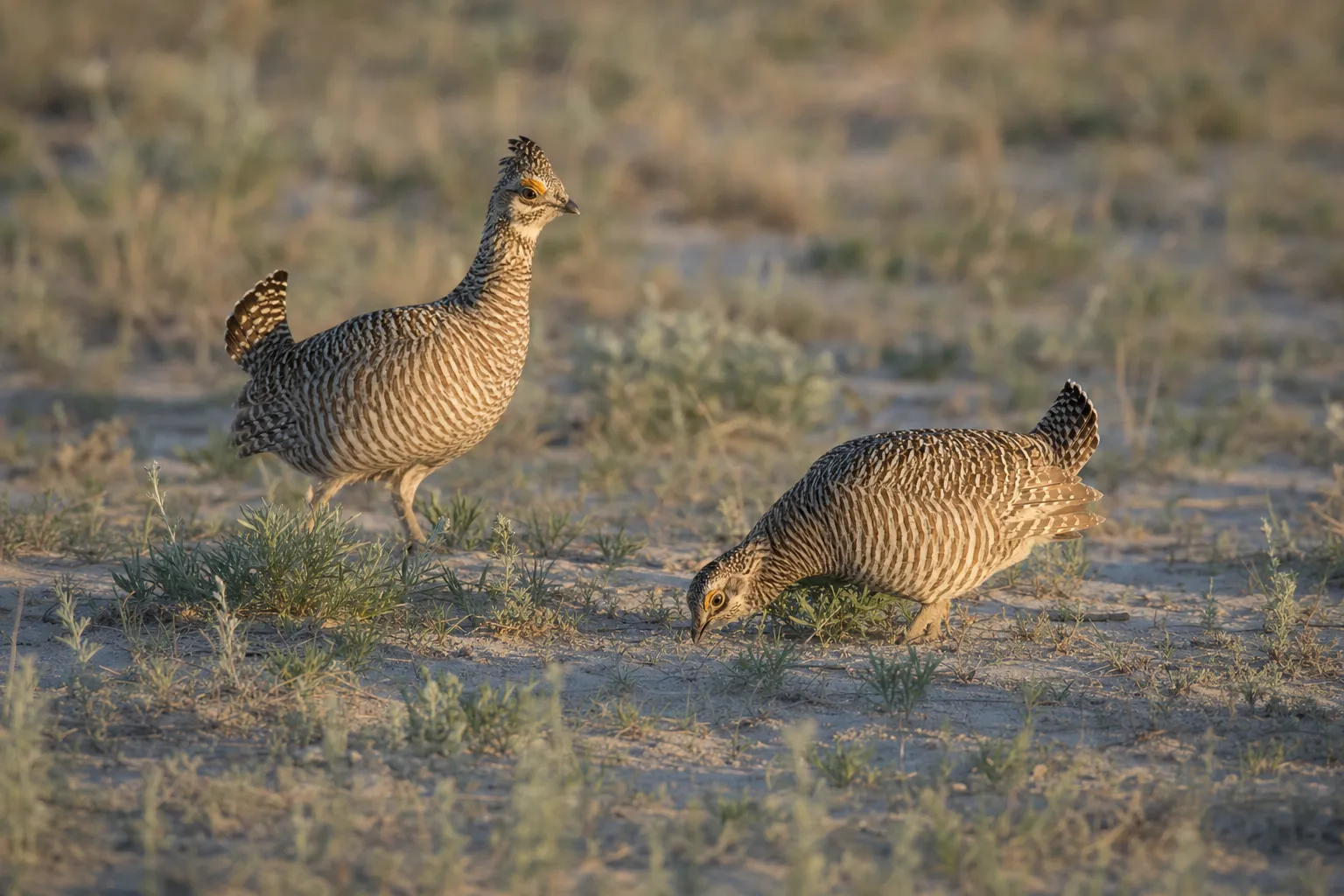
The bird itself is a smaller, paler edition of the greater prairie chicken. It weighs around a pound and a half, wears finer, lighter barring over a sandy-buff body, and carries the same short, rounded, dark tail and rabbit-ear pinnae feathers. Displaying males inflate reddish-purple air sacs, a shade redder than the greater’s orange, and give a faster, higher gobbling and bubbling song on the lek rather than the greater’s deep three-note boom. Hens of the two species are genuinely hard to split at a distance. Hunters and biologists on the southern plains mostly just say lessers.
The lesser is a lek bird through and through. Males return to the same open display grounds every spring, and those grounds are how biologists count the population and measure its long slide. That connection to a fixed patch of prairie is part of why the species is so vulnerable. Break up the grassland around a traditional lek and the birds do not simply move next door, they disappear.
The listing is recent history, not ancient. The US Fish and Wildlife Service finalized ESA protection for the species, with the southern population listed as endangered and the northern population as threatened, and the states closed their remaining seasons. Litigation over the listing continues, so the legal picture can shift. What does not shift is the practical answer for hunters. No season, anywhere, until further notice. Check current regs each fall rather than trusting anything older.
What do lesser prairie chickens eat?
Lesser prairie chickens eat insects, green forbs, seeds, and shinnery oak acorns and catkins, adding waste grain where cropland borders their prairie. Grasshoppers dominate the warm months and carry the chicks. Through winter, buds, seedheads, and leftover grain keep flocks alive in some of the harshest open country on the plains.
The bird is built for dry land. It meets most of its water needs through dew and succulent plants rather than open water, which is part of why it can live in sand country that supports little else. Food shapes its calendar the same way it does for the greater. Summer birds scatter across forb-rich grassland, and winter packs concentrate where shinnery oak, sand sagebrush, and grain stubble come together.
Shinnery oak deserves a note of its own. This knee-high oak grows in vast clones on deep sand and produces acorns and catkins that lessers lean on where it grows, especially in Texas and New Mexico. In the sand sagebrush country farther north, the bird trades acorns for sage and grassland forbs. Either way, the pattern is the plains pattern. The flock follows the food, and the food follows the seasons.
Where do you find lesser prairie chickens?
Lesser prairie chickens live in sand sagebrush and shinnery oak prairie across parts of western Kansas, western Oklahoma, the Texas Panhandle, eastern New Mexico, and southeastern Colorado. Western Kansas holds the biggest remaining population. Remember that finding one means watching, not hunting, since every one of those states is closed.
The reason this range matters to hunters is overlap. Greater prairie chickens remain legal in Kansas, and the two species share ground along the edge of the lesser’s range. Kansas closes prairie chicken hunting in units where lessers occur, so study the current unit map before any Kansas prairie grouse hunt and be sure of your bird before the gun comes up. If you want to see the species at its best, spring lek viewing at dawn, from a vehicle or blind at a respectful distance, is the way in.
For country you can actually hunt this fall, our state-by-state grouse and prairie bird guide covers the open options. The greater prairie chicken page covers the legal cousin in Kansas, Nebraska, and South Dakota, and the sharp-tailed grouse fills the same covey-bird role across the northern plains. And when a plains trip does come together, our 12 vs 20 vs 16 gauge comparison for grouse guns will help you settle the gun question before you go.
Field Marks
How to know a lesser prairie chicken
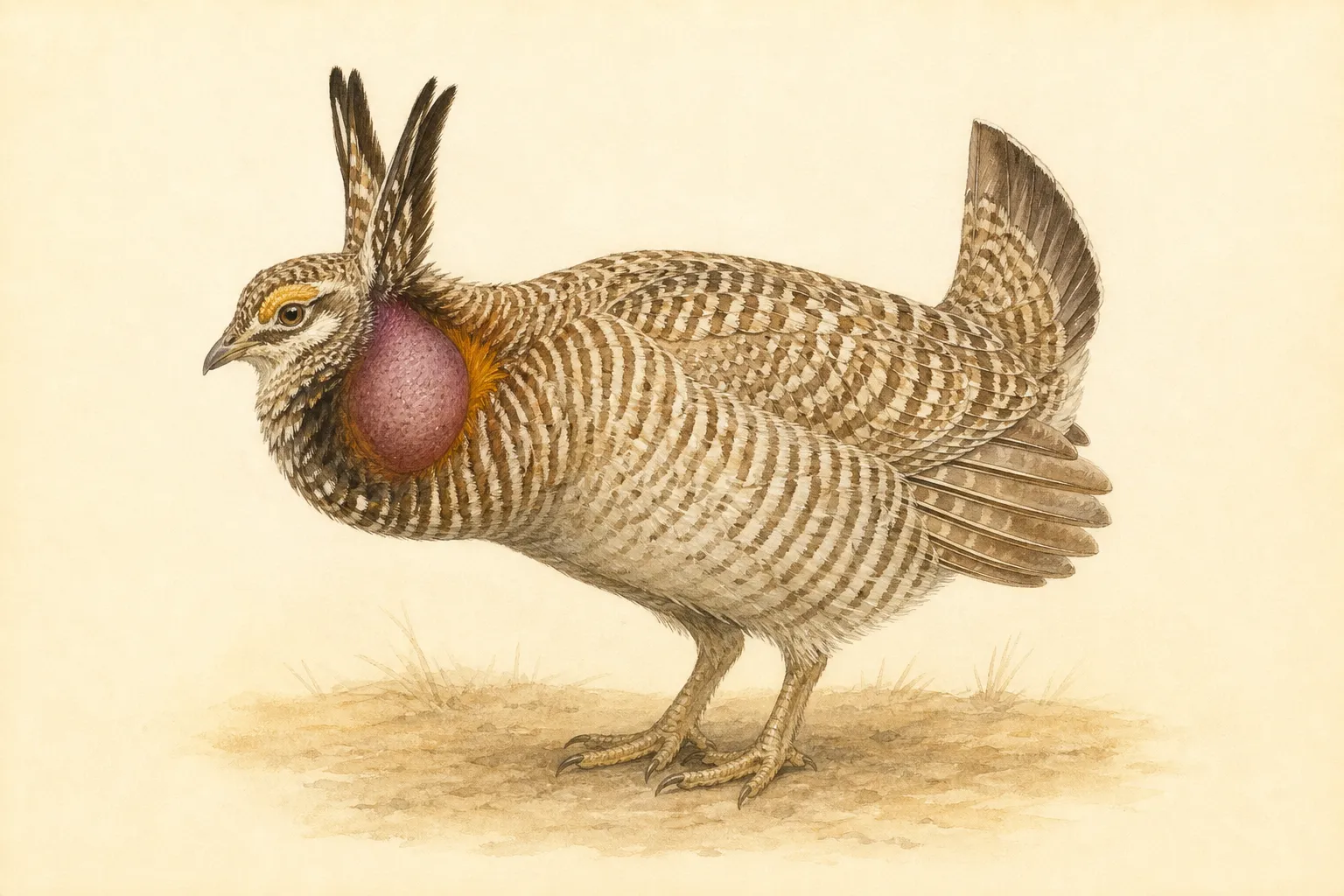
- Paler and slightly smaller than the greater prairie-chicken
- Finer, narrower barring across the body
- Males show dusky reddish-purple air sacs, not orange
- Same raised pinnae feathers in display
- Found in sand sagebrush and shinnery oak country
The Season Arc
How the Lesser Prairie Chicken season unfolds
-
Early Season
Opener to leaf-drop
There is no hunting season at any stage, but early fall finds broods and small flocks in sand sage and shinnery grasslands near forb patches.
- No open season, this section describes the bird's year, not a hunt
- Broods chase grasshoppers in forb-rich sandy grassland
- Birds water at dew and succulent plants, not open tanks
- Hunters after greaters in Kansas must know the closed lesser zones
-
Mid Season
Leaf-off
Flocks build through late fall and begin trading between native grassland and any nearby grain stubble.
- Flocks commute at dawn and dusk where cropland borders sand sage
- Mixed-range hunters should confirm identification before any shot at a prairie grouse
- Check state maps, some counties in the overlap zone restrict all prairie chicken hunting
- Report banded or marked birds to state biologists if found
-
Late Season
Cold and snow
Winter packs ride out cold on buds, seeds, and waste grain in the roughest sand country.
- Packs concentrate where shinnery oak and grain fields meet
- Deep winter is the easiest time to confuse lessers and greaters at distance
- Respect closures, a mistaken lesser in the bag is a federal problem
- Spring lek surveys, not hunts, are how people experience this bird up close
Times of Day
When to be in the cover
Morning
Lesser prairie chickens feed in the first hours of light, moving from grass roosts to forb patches or grain edges. Spring lek activity also peaks at dawn.
Midday
Birds loaf in taller sand sage and shinnery shade through midday heat, which is brutal in their range even in fall.
Evening
A second feeding period runs to dusk before birds fly back to roost in native grass.
Tactics Box
Lesser Prairie Chicken tactics that hold up
- There is no legal hunt, so the only fieldcraft that matters is identification and access ethics
- Learn the range maps before hunting greaters in western Kansas, the two species overlap
- Tell them apart by size, paler barring, and the male's redder air sacs before you ever need to in the field
- Watch a spring lek from a vehicle or blind at a respectful distance, birds abandon disturbed leks
- Support grassland conservation programs, they are the only path back to an open season
FAQ
Lesser Prairie Chicken questions, answered
Can you still hunt lesser prairie-chickens?
No, you cannot hunt lesser prairie-chickens anywhere right now. Hunting is closed across the bird's five-state range in Kansas, Oklahoma, Texas, New Mexico, and Colorado following its listing under the Endangered Species Act. The listing and related lawsuits are still moving through the courts, but no state offers a season as of 2026. Check current regs for any change before assuming otherwise.
What is the difference between a lesser and a greater prairie-chicken?
The lesser prairie-chicken is smaller and paler than the greater, with finer barring, and displaying males show reddish-purple air sacs instead of the greater's orange. Lessers live in sand sagebrush and shinnery oak country of the southern High Plains, while greaters favor taller grass farther north and east. The ranges overlap in western Kansas, where hunters after greaters need to know exactly which bird is flushing. Only the greater is legal to hunt.
Why is the lesser prairie-chicken protected?
The lesser prairie-chicken is protected because its population has fallen sharply as native prairie was converted to cropland and fragmented by development across the southern plains. The US Fish and Wildlife Service listed the species under the Endangered Species Act, with the southern population classified as endangered and the northern population as threatened. That listing closed all hunting. Habitat loss, not hunting, drove the decline.
Where do lesser prairie-chickens live?
Lesser prairie-chickens live on the southern High Plains in parts of Kansas, Oklahoma, the Texas Panhandle, eastern New Mexico, and southeastern Colorado. They depend on large blocks of sand sagebrush and shinnery oak prairie, habitats that grow on sandy soils too poor for most farming. Western Kansas holds the largest remaining share of the population.
Will lesser prairie-chicken hunting ever reopen?
Lesser prairie-chicken hunting could reopen someday, but only if populations recover enough for the bird to be delisted, and no one can honestly predict when or whether that happens. Legal challenges to the listing are ongoing and grassland restoration programs are working in the bird's favor. Until the states announce a season, treat the bird as fully protected and check current regs each year.