


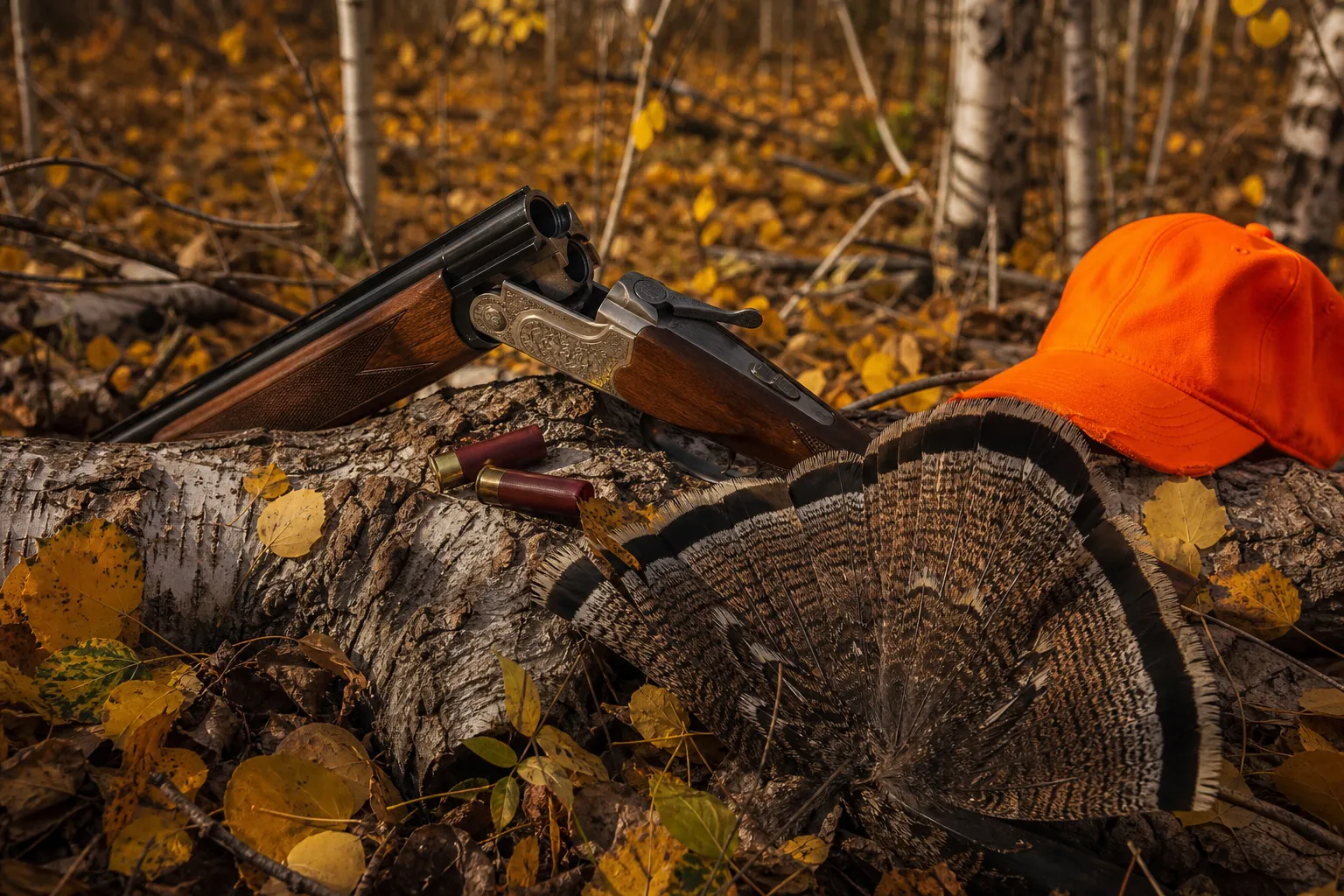

Walk into any gun shop and ask for a grouse gun and the conversation starts the same way. 12 or 20? That is the real decision for most hunters, and this article settles it. Then it makes the case for the answer your grandfather already knew, the 16 gauge, the classic grouse gauge that refuses to die.
Here is the short version. The 20 is the modern default and the right call for most people. The 16 is the connoisseur’s pick with one real tradeoff. The 12 earns its spot only if it has to do everything else too.
Does gauge actually matter for grouse hunting?
Less than you think, and more than you think, depending on where you look. Inside 25 yards, where most ruffed grouse (Bonasa umbellus) die, a well-patterned 20 kills birds exactly as dead as a 12. The bird cannot tell the difference. Your shoulders, your forearms, and your reaction time absolutely can.
Gauge matters in three places, and none of them is the moment the shot lands.
Carry weight. A grouse gun gets carried at port arms for four or five hours and shot maybe three times. A gun that weighs 7.5 pounds feels fine in the parking lot and feels like a fence post by noon. Every ounce you shave shows up in mile six.
Swing speed. Grouse give you a window of about a second and a half through a gap in the aspens. A light, lively gun mounts faster and swings through that gap. A heavy gun is still coming up when the bird is gone.
Shot payload. This is where the bigger gauges earn their keep. A 12 throws 1 1/8 ounces or more without strain. A 16 throws a true one ounce. A 20 typically throws 7/8 ounce. More pellets means denser patterns at the edge of range, which matters in October’s leaves and again in December when flushes stretch long.
So the question is not which gauge kills grouse. They all do. The question is which set of tradeoffs fits how you hunt.
The case for the 20 gauge: the modern default
The 20 gauge is the best grouse gauge for most hunters, full stop. It is light, it is fast, and it is everywhere. Every gun maker builds their upland flagship in 20. Every hardware store in grouse country stocks 20 gauge shells. If you are buying your first dedicated grouse gun, start here.
A dedicated 20 gauge over/under or side-by-side runs 5.5 to 6.5 pounds. That is a gun you stop noticing by the second hour, which is the whole point. The 7/8 ounce standard load of 7.5s carries roughly 300 pellets, and inside 25 yards that is a dense, forgiving pattern.
The 20 also grows with you. Woodcock in the same cover, preserve pheasants, a dove field in September. It is the do-most gauge in a way the smaller bores are not.
The honest knock: at the far edge of range, in late season, the 7/8 ounce payload gets thin faster than a 16 or 12. You can buy one ounce 20 gauge loads to close the gap, but they push a light gun’s recoil up noticeably. It is a real limitation. It is also one most grouse hunters will bump into twice a season.
The case for the 16 gauge: the classic answer
The old saying earns its keep. The 16 gauge carries like a 20 and hits like a 12. A true 16, built on a 16 gauge frame and not a 12 frame with smaller holes, weighs about what a 20 does and throws a full one ounce of shot, which many grouse hunters consider the perfect payload. That is the whole argument, and it is a good one.
The 16 is also the heritage gauge. For the first half of the twentieth century it was the American upland gauge, the partridge gun leaning by the door of every farmhouse in the Northwoods. When hunters talk about a grandfather’s grouse gun, odds are decent it was a 16.
And the 16 is back. After decades of drift toward extinction, ammo makers reloaded the gauge and gun makers followed. Browning brought the Sweet Sixteen name back. TriStar built an affordable 16 gauge side-by-side. Used racks are full of Model 12s, A5s, and old doubles in 16 that shoot as well as they ever did.
Now the tradeoff, because it is real. Ammo availability is the tax you pay. You will not find 16 gauge shells at a gas station in Ely at 6 a.m. on opening day. Selection is thinner, prices run higher, and non-toxic options are limited. The fix is simple but non-negotiable. Buy your season’s shells in the summer and keep a flat in the truck. If that sounds like a chore, buy a 20. If it sounds like part of the charm, welcome to the club.
The case for the 12 gauge: the one-gun answer
The 12 gauge belongs in this conversation for one reason. Versatility. If you own a single shotgun and it has to handle grouse in October, pheasants in November, ducks over decoys, and a turkey in the spring, the 12 does all of it and does it with ammo from any shelf in America.
The standard objection is weight, and it is fair. A field-grade 12 at 7.5 pounds is a poor grouse gun. But light 12s exist and they change the math. The Browning Citori 725 Feather and the Benelli Ultra Light both bring a 12 gauge in around the weight of many ordinary 20s. A light 12 shooting one ounce loads is, functionally, a 16 with better ammo availability. That is a legitimate grouse gun.
The 12 also owns late season. When December birds flush at 30 yards through bare popple, a 1 1/8 ounce load of 6s is comforting math. And if you hunt where non-toxic shot is required, the 12’s steel and bismuth selection is far deeper than any other gauge.
The honest knock: most 12s are still heavy, and the gauge tempts you into loads a grouse never required. Buy a light one, feed it one ounce loads, and it earns its place. Buy a heavy one and you will leave it in the truck by mid-October.
12 vs 20 vs 16 gauge: the comparison table
| 20 gauge | 16 gauge | 12 gauge | |
|---|---|---|---|
| Typical grouse gun weight | 5.5 to 6.5 lb | 6 to 6.75 lb | 6.25 to 7.5 lb (light models near 6) |
| Common payload range | 3/4 to 1 oz (7/8 oz standard) | 1 to 1 1/8 oz (1 oz standard) | 1 to 1 1/4 oz (1 1/8 oz standard) |
| Felt recoil in a field gun | Mild | Mild to moderate | Moderate, mild in light guns with 1 oz loads |
| Ammo availability | Excellent, everywhere | Fair, plan ahead, limited non-toxic | Excellent, deepest selection of all |
| Best use case | Dedicated grouse and woodcock gun, most hunters | The classic grouse gun for hunters who plan ahead | One gun for everything, late season, non-toxic zones |
Top grouse guns by gauge
These are the guns that come up around every grouse camp fire, positioned honestly. Weights and prices change by model year, so verify before you buy.
Browning Citori 725 Feather and Citori Superlight
The Feather puts an alloy receiver under the proven Citori action and turns a clays-weight over/under into a legitimate carry gun, in 12 or 20. The Superlight adds the straight English grip that grouse hunters love for fast mounts. These are buy-once guns. You pay for them, and thirty years later your kid is still shooting them.
Beretta 686 Silver Pigeon I and A400 Upland
The Silver Pigeon I is the default answer to “which over/under should I buy” for a reason. Balanced, durable, and pretty enough without being precious about it. The A400 Upland is the semi-auto for hunters who want three shots and Beretta’s soft-shooting gas system in a field-trim package. Neither is the lightest option in its class. Both are among the most proven.
Benelli Ultra Light and Montefeltro
The Ultra Light is exactly what the name says, one of the lightest semi-autos ever put in the grouse woods, and the inertia action keeps it simple and clean-running. The Montefeltro is the slightly more traditional take, slim, quick, and famously reliable. If you want a repeater that carries like a double, Benelli owns this lane.
Franchi Instinct SL
The Instinct SL is the value play in light over/unders. Alloy receiver, real-world grouse weight, and a price meaningfully below the Browning and Beretta it competes with. It gives up some refinement and some long-haul reputation to the big two. For a hunter who wants a light Italian over/under without the flagship price, it is the obvious first look.
CZ Bobwhite G2 and Sharp-Tail
CZ’s budget doubles are the honest workhorses of this list. The Bobwhite G2 is a side-by-side with double triggers and a straight grip, old-school in all the right ways. The Sharp-Tail is the single-trigger version for hunters who want the classic profile with modern manners. Fit and finish match the price, which is to say functional, not fancy. They get carried hard and nobody cries over pump scratches.
Savage/Stevens 555
The 555 is the entry point to over/under grouse guns. Alloy receiver keeps it light, the price keeps it accessible, and it does the job. It will not survive three generations the way a Citori will, and the triggers and ejectors show the cost savings. As a first double or a loaner gun for grouse camp, it makes real sense.
TriStar Bristol
The Bristol matters on this list for one big reason. It is a new-production 16 gauge side-by-side at a working hunter’s price, with case coloring and a straight grip that look like guns costing three times as much. If the 16 gauge section above spoke to you and your budget does not reach a vintage double in good condition, the Bristol is how you get in.
What choke and load for grouse?
Open chokes and small shot. That is the whole recipe. Grouse are killed close, in cover, with pattern density, and everything about your setup should serve that.
Run skeet or improved cylinder. In a double gun, skeet in the first barrel and IC in the second is the classic grouse setup. Cylinder bore is not a handicap early in the season, it is an advantage.
For loads, shoot 7.5s and 8s early when the leaves are up and flushes come at boot-top range. Step up to 6s late in the season when the woods open up and birds flush wild. The full season-by-season and species-by-species breakdown, including the steel and bismuth conversions, is in our guide to shot size for grouse.
Verdict: which gauge is right for you?
There is no single winner. There is a right answer for each kind of hunter.
You are buying your first dedicated grouse gun. Buy a 20. Light, fast, ammo everywhere, and it will never be the reason you missed. This is the answer for most people reading this page.
You hunt grouse a lot and you like the story as much as the shot. Buy a 16. The one ounce payload is genuinely ideal, the carry weight is honest, and the gauge connects you to a century of partridge hunters. Just buy your shells in July.
You own one shotgun and it does everything. Buy a 12, and buy a light one. A Citori Feather or Ultra Light with one ounce loads is a real grouse gun nine months a year and a duck and pheasant gun the rest.
You hunt late season hard, or in non-toxic zones. The 12 again. Payload and shell selection win when the flushes get long and the rules get strict.
Whatever you pick, put it in a gun that weighs less than 6.75 pounds, choke it open, feed it 7.5s, and go walk the aspen edges. The bird does not care what is stamped on the barrel. Your arms will, around mile six.
FAQ
Questions hunters ask
Is a 20 gauge enough for grouse?
Yes, a 20 gauge is more than enough for grouse, and it is the most popular gauge in the grouse woods today. Most ruffed grouse are killed inside 25 yards, where a 7/8 ounce load of 7.5 shot patterns plenty dense. The lighter gun also matters more than the payload. You will carry it for miles and mount it faster when a bird thunders out.
Why do grouse hunters like the 16 gauge?
Grouse hunters like the 16 gauge because it splits the difference between the 12 and the 20. The old line is that it carries like a 20 and hits like a 12. A true 16 is built on a lighter frame than a 12 but throws a full one ounce load, which is an ideal grouse payload. It is also the heritage gauge, the one your grandfather's partridge gun was probably chambered in.
Do they still make 16 gauge shotguns?
Yes, several makers still build new 16 gauge shotguns, and the gauge has been in a genuine comeback for years. Browning has offered the Citori and Sweet Sixteen A5 in 16, and TriStar builds the Bristol side-by-side in 16 gauge at a working hunter's price. Used racks also hold decades of great 16s. The catch is ammo, which is real but manageable if you stock up before the season.
What is the best barrel length for grouse hunting?
For most grouse hunters, 26 inch barrels are the sweet spot on a break-action gun, and 24 to 26 inches on a semi-auto. Shorter barrels swing faster in tight cover and snag less in the alders. Go to 28 inches only if you also shoot clays or open-country birds with the same gun and want the smoother swing.
What shot size for ruffed grouse?
No. 7.5 lead is the all-season standard shot size for ruffed grouse. Run 8s early when the leaves are up and flushes are close, and step up to 6s late in the season when birds flush wild. Pattern density kills grouse, not pellet energy, because most shots come inside 25 yards.