


What is a spruce grouse?
The spruce grouse (Canachites canadensis) is a small, dark grouse of the northern conifer forest, famous for two things: sitting still while you walk right up to it, and tasting like the trees it eats. It runs a touch smaller than a ruffed grouse and lives in thicker, darker cover.
One callout worth knowing: old-timers call this bird the fool hen, because its habit of freezing in place instead of flushing makes it look foolishly tame. That tameness is a survival strategy built for deep wilderness, not stupidity.
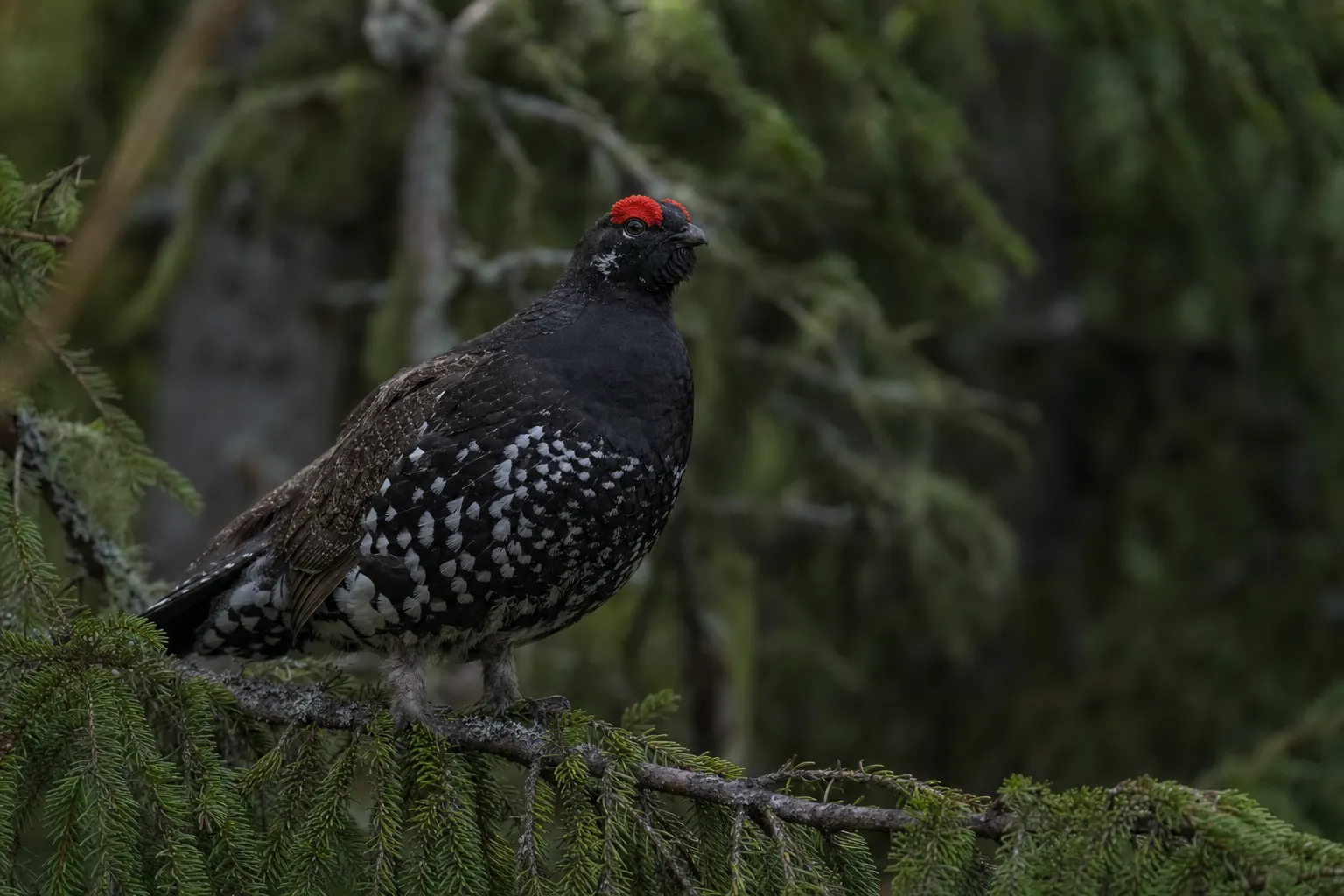
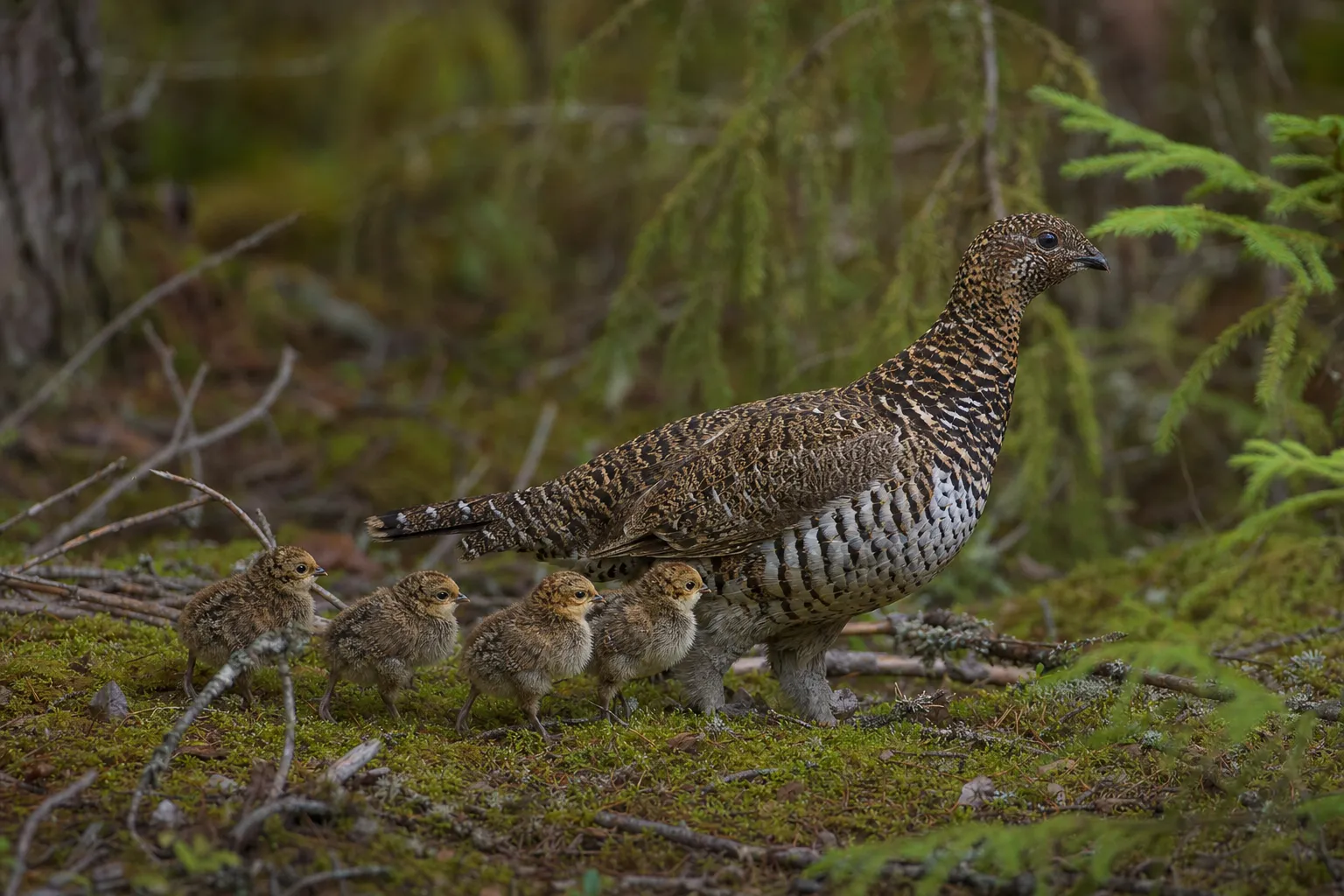
A male spruce grouse is a striking bird, with a black chest and throat, white-tipped body feathers, and a bright red comb over each eye. Hens are mottled gray or rusty brown and blend into the forest floor. Both sexes show a dark tail, shorter and rounder than a ruffed grouse fan.
Spruce grouse are quiet compared to their drumming cousin. Males court with short flutter flights and soft, low sounds, and some western birds add a sharp double wing clap in display flights. Most hunters never hear a spruce grouse at all. You find them with your eyes and your dog’s nose, not your ears.
What do spruce grouse eat?
Spruce grouse eat conifer needles for most of the year, mainly pine and spruce, and that diet is the whole story of this bird. In summer and early fall they mix in berries, mushrooms, green leaves, and insects. By late season they are back on needles almost exclusively.
That winter diet is why timing matters at the table. An early-October bird full of blueberries and cranberries eats well. A late-season bird that has lived on jack pine needles for weeks carries a strong resinous flavor that people politely call piney. It is the most food-driven flavor swing of any North American game bird.
For hunters, the diet is also a map. Early season, hunt the berry patches, sunny edges, and trail sides where birds mix their diet. Late season, hunt the dense conifer stands themselves, because the birds no longer need to leave them. Grit is the other draw. Spruce grouse need gravel to grind needles, which is why logging roads through black timber are the classic place to find them morning and evening.
Spruce grouse vs ruffed grouse
The quick answer: ruffed grouse are brown or gray birds of young aspen and brushy edge that flush hard and wild, while spruce grouse are darker birds of dense conifers that sit tight and often let you walk close. They overlap across the northern forest, but they behave like different animals.
Identification is straightforward in hand. A ruffed grouse shows the banded fan tail and neck ruff. A male spruce grouse shows a black chest and red eye combs, and hens are smaller and darker than most ruffed grouse, without the bold tail band. In the air, a ruffed grouse thunders away through the trees while a spruce grouse often flies a short hop to a nearby branch and watches you.
The table settles the rest. Ruffed grouse have pale, mild breast meat and are prized eating all season. Spruce grouse are darker-fleshed and swing from good to strongly piney as the season runs. Where seasons overlap, know both birds before you shoot, because a few states protect spruce grouse while ruffed grouse are fair game.
Where do you find spruce grouse?
Alaska is the destination for spruce grouse, with huge populations and long seasons. In the Lower 48, the bird is legal game in only a handful of northern states. Huntable seasons exist in Maine, Minnesota, Idaho, Montana, and Washington, while several other states in its range protect it entirely.
This is the most important fact on the page. Spruce grouse look enough like other grouse in dim timber that hunters in protected states shoot them by mistake every year. Check current regs for your state, and be sure of your bird before the trigger.
Habitat is dense, dark conifer forest: black spruce bogs, jack pine barrens, lodgepole and fir in the western mountains. Hunt the edges where conifer stands meet trails, old burns, and berry ground. National forest land across the northern tier holds plenty of cover, and our state-by-state guide to where to hunt grouse covers the best starting points.
Most hunters meet spruce grouse while chasing the ruffed grouse, the aspen bird that shares the Northwoods. Out West, the conifer-needle winter diet repeats in the dusky grouse of the high ridges. Whichever bird you chase, a light, open-choked gun is right for this cover, and our 12 vs 20 vs 16 gauge comparison will help you pick it.
Field Marks
How to know a spruce grouse
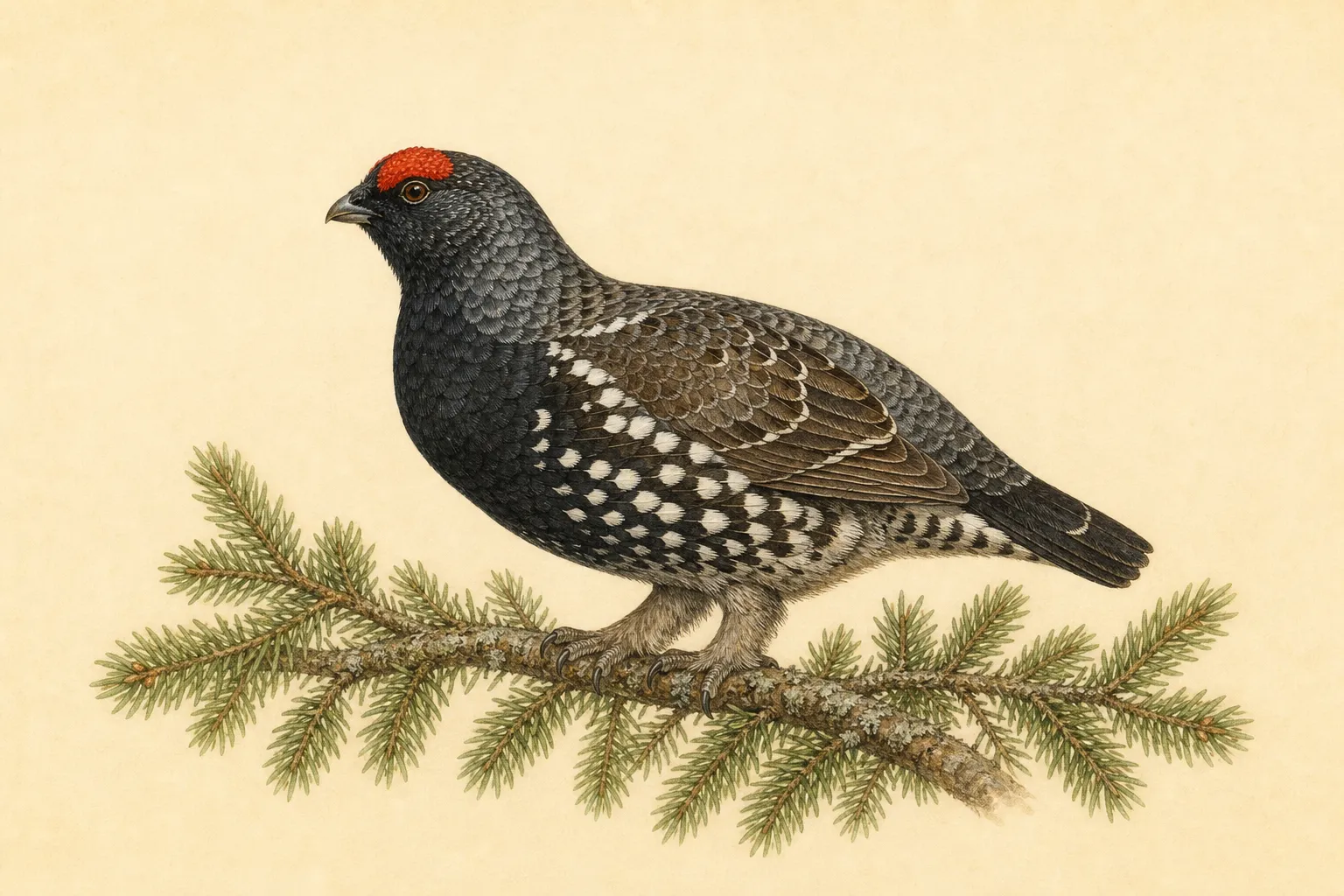
- Males are slate black on the breast with white-spotted flanks
- Vivid red comb over each eye on males
- Hens are barred brown and easily confused with ruffed grouse
- Short dark tail, often with a rusty tip
- Famously tame, often holding on a branch at arm’s length
The Season Arc
How the Spruce Grouse season unfolds
-
Early Season
Opener to leaf-drop
Early birds mix berries and insects into the diet and sit along the edges of conifer stands, gravel roads, and trail systems.
- Walk trails and old roads through black spruce and jack pine at first light.
- Look down as much as up, because birds often hold on the ground at your feet.
- Broods stay grouped early, so mark every bird from a flush.
- Early-season birds eating berries are the best-tasting spruce grouse of the year.
-
Mid Season
Leaf-off
As berries fade, birds drift deeper into conifer cover and spend more time in the trees, where their stillness hides them.
- Slow way down and scan branches near the trunk, not just the forest floor.
- Focus on dense young conifer thickets next to feeding edges.
- Listen for soft wingbeats overhead when a bird repositions.
- A dog's nose finds birds your eyes walk past in the shadows.
-
Late Season
Cold and snow
Late-season birds live almost entirely on conifer needles and hold tight to thermal cover in the darkest, thickest stands.
- Hunt the thickest spruce and fir pockets, especially on cold days.
- Birds feed in trees for short windows and barely move otherwise.
- Snow makes tracks and droppings under roost trees easy to read.
- Expect close flushes to nearby branches rather than long escape flights.
Times of Day
When to be in the cover
Morning
Birds pick grit and feed along road and trail edges early. A slow morning walk on logging roads through conifer country is the classic tactic.
Midday
Spruce grouse sit motionless in dense conifers through midday. Still-hunt the thick stands and check branches close to the trunks.
Evening
Birds return to feeding edges and grit sources late in the day. Retrace the same roads and edges you walked at dawn.
Tactics Box
Spruce Grouse tactics that hold up
- Walk logging roads and trails through black timber instead of grinding through the thick stuff blind.
- Scan tree branches constantly, because a sitting spruce grouse looks exactly like a dark stub of wood.
- Move slowly. This is a spot-and-walk hunt more than a flush hunt.
- A close dog helps enormously, since these birds hold rather than run.
- Give birds sporting flushes on the wing rather than taking them off a branch, and know your state's rules either way.
- Shoot early-season birds for the table and let the deep-winter needle-eaters walk if flavor matters to you.
FAQ
Spruce Grouse questions, answered
Are spruce grouse good to eat?
Spruce grouse are good to eat in early fall, but late-season birds develop a strong piney flavor from their winter diet of conifer needles. Early birds fattened on berries and insects taste close to other grouse, with darker meat than a ruffed grouse. If you shoot a late bird, brine it or cook it in a strongly flavored dish.
What is the best time of day to hunt spruce grouse?
Early morning and late afternoon are the best times to hunt spruce grouse, when birds feed and pick grit along road and trail edges. Through midday they sit still in dense conifers and are much harder to spot. Plan road and trail walks for the first and last hours of the day.
Where is the best spruce grouse hunting in the US?
Alaska offers the best spruce grouse hunting in the US, with abundant birds and long, generous seasons. In the Lower 48, huntable populations exist in states like Maine, Minnesota, Idaho, Montana, and Washington. The bird is protected in several other states where it occurs, so confirm legality in your state before you hunt.
What choke and shot size for spruce grouse?
An open choke like improved cylinder with No. 7.5 shot covers spruce grouse hunting well, since most shots are close. These are small birds in tight cover, so pattern density matters more than pellet energy. Many Alaska hunters take them with even lighter setups.
Why are spruce grouse so tame?
Spruce grouse are tame because they evolved to avoid predators by freezing and relying on camouflage instead of flushing wild. In remote conifer forests that strategy works, and it earned them the nickname fool hen. A bird may sit on a branch and watch you from a few feet away rather than fly.