


Ask around any grouse camp and someone will tell you their best dog ever was a Llewellin. A Llewellin Setter is an English Setter by breed and something more specific by blood. It is the field strain that never left the birds, and that is exactly why grouse hunters hunt them.
Heritage
The Llewellin setter traces to one man. Purcell Llewellin, a Welsh sportsman of the 1800s, set out to breed the finest field setters alive. He started with Edward Laverack’s carefully line-bred setters, then crossed in outside field blood to sharpen the hunt. The result was a strain of setter that ran, pointed, and handled birds better than anything the trials had seen.
American sportsmen noticed. Llewellin’s dogs were imported through the late 1800s and tore up early American field trials. Dogs like Gladstone and Count Noble became famous among bird hunters, and demand for the blood ran so hot that “Llewellin” became the word for a class of setter.
Here is the registry nuance that trips people up. The Field Dog Stud Book, the oldest purebred registry in America, tracks Llewellin setters as a distinct strain and certifies dogs whose ancestry traces back to Llewellin’s breeding. The AKC does not. To the AKC, every one of these dogs is simply an English Setter. So the papers that matter say FDSB, and a breeder selling “pure Llewellin” pups should be able to show that registration. If they cannot, you are buying the word, not the blood.
Why do grouse hunters seek them out? Because the strain was never split by the show ring. Every generation was bred to find birds. In a breed where field and bench lines drifted apart long ago, the Llewellin name is shorthand for a setter that still earns its keep in October.
The Mystique
The Llewellin has a word-of-mouth reputation, passed along tailgates rather than built by ad campaigns. Hunters who own one say the name like a handshake. The strain survives through small kennels, many of them run by grouse and woodcock hunters who breed a litter or two a year and sell most pups to people they know.
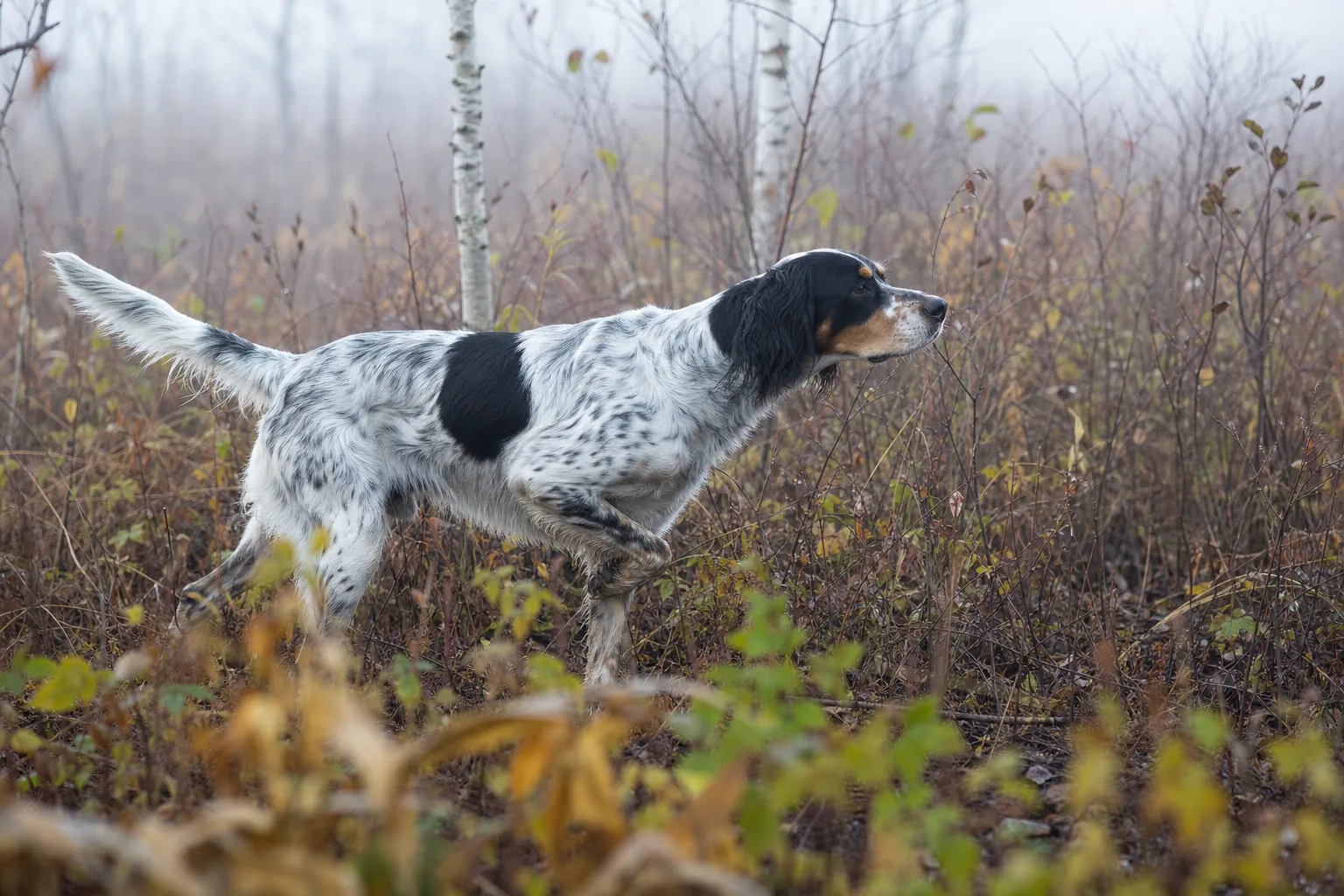
Part of the charm is the look. Llewellins tend to run smaller and lighter than bench setters, with ticked belton coats in blue, orange, and tri-color that seem made for a frosty popple ridge. Part of it is the precocity. Owners tell the same story again and again, a puppy slamming into a real point months before anyone taught it anything. The blood remembers.
And part of it is history you can touch. When you hunt behind a Llewellin, you are running a bloodline that American bird hunters have argued about, bragged about, and saved from fading out for more than a century. Plenty of dogs will find you grouse. Not many carry that kind of story into the woods with you. It is a working heirloom, and the people who keep the strain going treat it that way.
In the Grouse Woods
A Llewellin setter hunts grouse at a sensible medium range with a pace built for a foot hunter. In young aspen and alder the dog shortens up. On edges and trails it stretches. The smaller frame is a genuine asset in thick cover, slipping through whips that a heavier dog crashes.
Run a bell, a GPS collar, or both. A pointing dog you cannot see is the price of hunting real grouse cover, and the silence of a stopped bell is still the best sound in the woods. On running ruffed grouse (Bonasa umbellus), a Llewellin with a few seasons learns to trail carefully and pin the bird rather than push it out the far side.
Woodcock crossover is built in. The same covers hold both birds, and most Llewellin pups earn their first staunch points on woodcock before graduating to grouse. If you hunt the flights each fall, this strain gives you two seasons in one dog.
The Other Ten Months
Between seasons a Llewellin is an easy house dog with a full tank. Expect an affectionate, slightly velcro companion that wants to be in the room with you. The smaller size makes them practical in a normal house and a normal truck.
The energy still needs a job. Daily running, summer pigeon work, and off-season conditioning keep the dog sharp and your furniture safe. The feathered coat picks up burrs and needs a weekly brushing, though most field-bred coats run lighter than show coats. These dogs do best living inside with their people, not warehoused in a kennel run.
Is This Your Dog?
Get a Llewellin if you want a setter with field breeding you can verify, at a size built for grouse cover, and you are willing to seek out a real breeder. It is a strong choice for a first pointing dog, because natural instinct covers a multitude of training sins.
Skip it if you want a show prospect, a couch ornament, or instant results without exercise. And do the homework. The Llewellin name gets used loosely, so ask for FDSB papers and ask where the parents hunt. A breeder who answers with grouse covers instead of pedigree charts is the one you want.
Start with the English Setter page for the full breed picture, or compare the Gordon Setter if you like a heavier, more deliberate dog. Study the bird itself in our ruffed grouse field guide, pick the right gun in the 12 vs 20 vs 16 gauge grouse gun comparison, and see how the strain stacks up against every breed in the grouse dog guide.
FAQ
Llewellin Setter questions, answered
What is a Llewellin setter?
A Llewellin setter is a field-bred strain of the English Setter descended from the breeding program of Purcell Llewellin in 1800s Britain. It is not a separate breed. The strain is tracked through the Field Dog Stud Book, and hunters prize it because every generation behind the pup was bred to hunt, not to show. For grouse hunters that pedigree means natural pointing instinct and a practical, foot-hunting size.
Is a Llewellin setter the same as an English setter?
Every Llewellin setter is an English Setter, but not every English Setter is a Llewellin. Llewellin describes a specific field-bred bloodline within the breed, registered as its own strain by the Field Dog Stud Book. The AKC registers all of them simply as English Setters. Think of it as the difference between the breed and a family within the breed that never stopped hunting.
Is a Llewellin setter a good grouse dog?
Yes. The Llewellin setter is one of the best grouse dog choices going, because the strain has been selected for bird work for over a century. Expect early pointing instinct, a workable medium range, and a size that slips through thick cover. Grouse and woodcock hunters make up a big share of the people who keep these bloodlines alive.
How far does a Llewellin setter range when hunting?
Most Llewellin setters hunt at medium range, roughly 50 to 150 yards, and tighten up on their own in thick grouse cover. Lines vary, so ask the breeder how the parents handle in the woods rather than in open field trials. A bell or GPS collar covers you when the dog works out of sight.
Are Llewellin setters good family dogs?
Yes, Llewellin setters make gentle, people-oriented family dogs when they get real exercise. They are smaller than most bench setters, settle well in the house, and are patient with kids. The energy that makes them all-day grouse dogs has to go somewhere, so plan on daily running between seasons.